
SteelonCall Journal
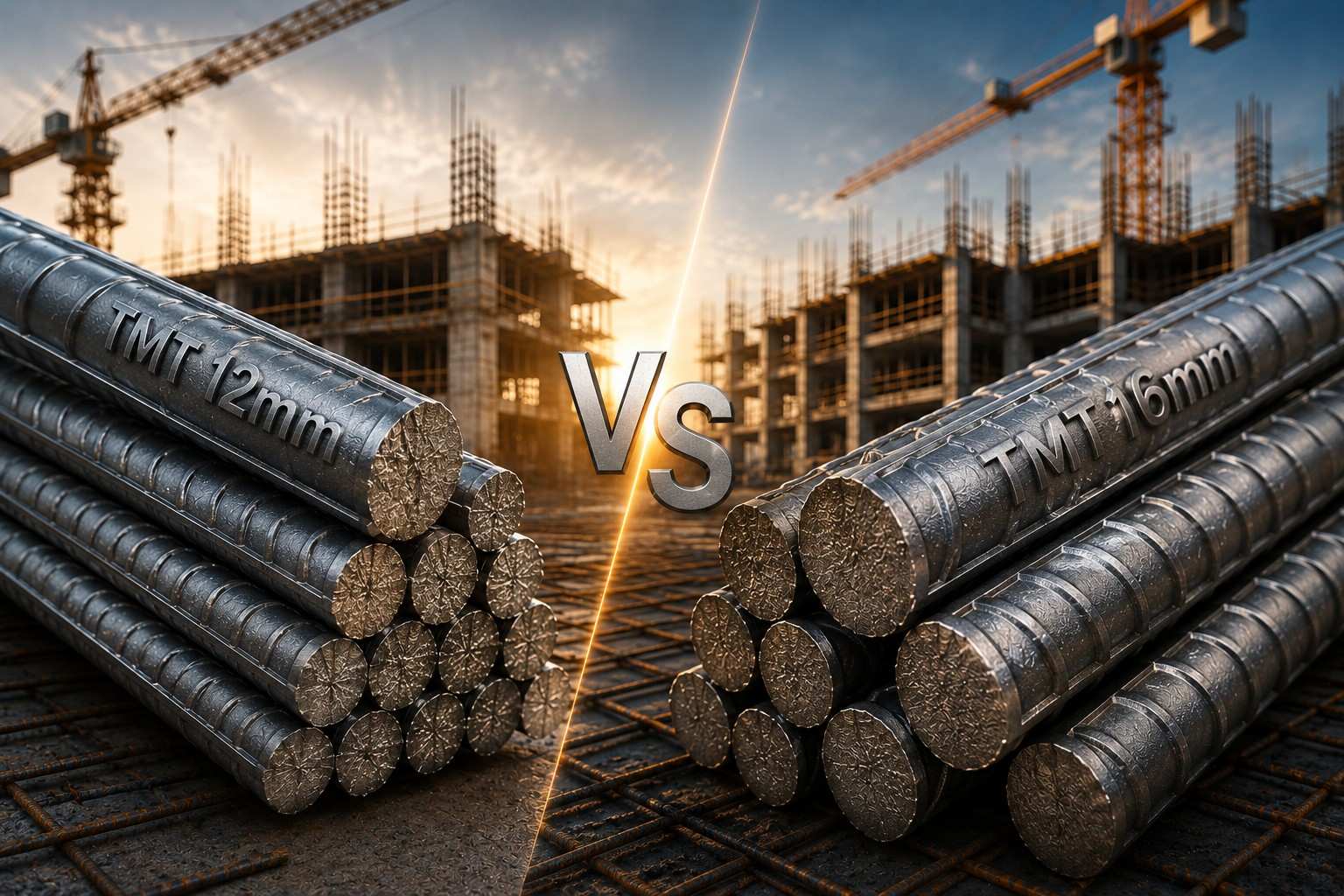
12mm vs 16mm TMT Bars: Which One Should You Choose for Your Construction Project?
Steeloncall
24 June 2026 · 5 min read
On this page
- Introduction
- Understanding TMT Bar Sizes
- 12mm vs 16mm TMT Bars: Quick Comparison
- Where Are 12mm TMT Bars Used?
- Advantages of 12mm TMT Bars
- Where Are 16mm TMT Bars Used?
- Advantages of 16mm TMT Bars
- Weight Difference Between 12mm and 16mm TMT Bars
- Which TMT Bar Is Better for House Construction?
- Factors to Consider Before Choosing
- Popular Brands Available in 12mm and 16mm Sizes
- Buy 12mm and 16mm TMT Bars Online Through SteelonCall
- Conclusion
- FAQs
Introduction
Choosing the right TMT bar size is one of the most important decisions in any construction project. While factors such as grade, brand, and price matter, selecting the correct diameter directly impacts the structural strength, safety, and cost of your building.
Among the most commonly used reinforcement sizes, 12mm TMT bars and 16mm TMT bars are widely preferred for residential, commercial, and infrastructure projects. However, many builders and homeowners often wonder: Which one is better—12mm or 16mm TMT bars?
The answer depends on your project requirements, load-bearing needs, structural design, and budget. This guide compares 12mm and 16mm TMT bars to help you make an informed procurement decision.
Understanding TMT Bar Sizes
TMT bar diameter determines its strength, weight, and load-carrying capacity.
-
12mm TMT Bars are generally used for slabs, beams, lintels, and residential construction.
-
16mm TMT Bars are primarily used in columns, foundations, heavy beams, and high-load structures.
As the diameter increases, the bar's load-bearing capacity also increases, making it suitable for more demanding structural applications.

12mm vs 16mm TMT Bars: Quick Comparison
| Parameter | 12mm TMT Bar | 16mm TMT Bar |
| Diameter | 12mm | 16mm |
| Weight per Meter | 0.888 kg | 1.58 kg |
| Strength Capacity | Moderate | High |
| Common Usage | Slabs, beams, residential structures | Columns, footings, heavy-load structures |
| Material Consumption | Lower | Higher |
| Cost per Meter | Lower | Higher |
| Suitable for House Construction | Yes | Specific structural members |
| Infrastructure Projects | Limited | Widely Used |
Where Are 12mm TMT Bars Used?
12mm TMT bars are among the most popular reinforcement bars used in residential construction.
Common Applications:
- Roof slabs
- Small and medium beams
- Staircases
- Lintels
- Residential buildings
- Low-rise structures
Advantages of 12mm TMT Bars
1. Cost-Effective
Since they weigh less than 16mm bars, overall steel consumption and project costs are lower.
2. Easier Handling
Transportation, cutting, bending, and installation are simpler.
3. Ideal for Residential Projects
Most individual house constructions use 12mm bars extensively in slabs and beams.
4. Reduced Structural Weight
Suitable where excessive reinforcement is unnecessary.
Where Are 16mm TMT Bars Used?
16mm TMT bars are designed for structures that require higher load-bearing capacity.
Common Applications:
-
Columns
-
Foundations
-
Footings
-
Heavy beams
-
Commercial buildings
-
Multi-storey structures
-
Industrial projects
Advantages of 16mm TMT Bars
1. Higher Load Capacity
The larger diameter provides greater tensile strength and structural stability.
2. Better Performance in Heavy Structures
Suitable for buildings with multiple floors and high structural loads.
3. Enhanced Structural Safety
Helps improve overall durability and resistance against stress.
4. Preferred for Columns and Foundations
Structural engineers commonly specify 16mm bars for critical load-bearing members.
Weight Difference Between 12mm and 16mm TMT Bars
Understanding weight is important for estimating steel requirements and project costs.
For a 12-meter bar:
-
12mm TMT Bar Weight: 10.66 kg
-
16mm TMT Bar Weight: 18.96 kg
The difference significantly impacts overall steel consumption in large projects.
Which TMT Bar Is Better for House Construction?
For most residential buildings:
Choose 12mm TMT Bars When:
-
Constructing individual houses
-
Reinforcing slabs
-
Building low-rise structures
-
Managing budget-conscious projects
Choose 16mm TMT Bars When:
-
Reinforcing columns and footings
-
Building G+2, G+3, or taller structures
-
Handling heavy structural loads
-
Following engineer-approved structural designs
In many projects, both sizes are used together rather than choosing one over the other.

Factors to Consider Before Choosing
Structural Design
Always follow the recommendations provided by your structural engineer.
Load Requirements
Higher loads typically require larger diameter bars.
Building Height
Multi-storey buildings often need 16mm bars in critical structural members.
Budget Planning
Larger diameter bars increase steel consumption and project costs.
Local Building Standards
Ensure compliance with BIS standards and approved construction specifications.
Popular Brands Available in 12mm and 16mm Sizes
Builders can find both sizes from leading steel manufacturers such as:
-
Tata Tiscon
-
JSW Steel
-
Jindal Panther
-
Kamdhenu NXT
-
Shyam Steel
-
Radha TMT
Buy 12mm and 16mm TMT Bars Online Through SteelonCall
SteelonCall helps builders, contractors, and procurement professionals source quality TMT bars from trusted brands across India.
Benefits of Buying Through SteelonCall:
-
Live steel prices
-
Multiple brand options
-
Verified suppliers
-
Bulk quantity support
-
Mill Test Certificate (MTC) availability
-
Fast delivery across locations
Whether you need 12mm bars for slab reinforcement or 16mm bars for structural columns, SteelonCall simplifies the procurement process with transparent pricing and reliable supply.
Conclusion
The choice between 12mm and 16mm TMT bars depends entirely on the structural requirements of your project. While 12mm bars are widely used in slabs, beams, and residential construction, 16mm bars are preferred for columns, foundations, and heavy-load applications.
Rather than choosing one over the other, most construction projects use a combination of both sizes to achieve the required strength, safety, and cost efficiency. Always consult a qualified structural engineer before finalizing reinforcement specifications.
FAQs
1. Which is stronger, 12mm or 16mm TMT bars?
16mm TMT bars are stronger and can handle higher structural loads compared to 12mm bars.
2. Can I use 12mm TMT bars for columns?
Column reinforcement should be based on structural design. In many cases, engineers recommend 16mm bars for columns due to higher load-bearing requirements.
3. What is the weight of a 12mm TMT bar?
A 12mm TMT bar weighs approximately 0.888 kg per meter.
4. What is the weight of a 16mm TMT bar?
A 16mm TMT bar weighs approximately 1.58 kg per meter.
5. Which TMT bar size is best for house construction?
For most residential projects, 12mm bars are commonly used in slabs and beams, while 16mm bars are used in columns and foundations as per structural design.
Need a price for your requirement?
Share your grade, diameter and quantity — our steel experts come back with a live quote and delivery timeline.