
SteelonCall Journal
GI Pipe Suppliers in Hyderabad: Types, Sizes, Applications, Prices & Buying Guide
Steeloncall
13 August 2026 · 9 min read
On this page
- Quick Answer
- What Is a GI Pipe?
- How Are GI Pipes Made?
- Types of GI Pipes
- Common GI Pipe Sizes
- GI Pipe Applications in Hyderabad
- Water Supply and Plumbing
- Construction
- Agriculture
- Fire Protection
- Industrial Applications
- GI Pipe vs MS Pipe
- What Is Zinc Coating in GI Pipes?
- How to Choose GI Pipe Suppliers in Hyderabad
- 1. Verify Pipe Specifications
- 2. Check Product Quality
- 3. Check Stock Availability
- 4. Compare Complete Quotations
- 5. Evaluate Delivery
- GI Pipe Weight and Price Calculation
- Why Buy GI Pipes Online in Hyderabad?
- Why Choose SteelonCall for GI Pipes in Hyderabad?
- GI Pipe Buying Checklist
- Conclusion
- FAQs
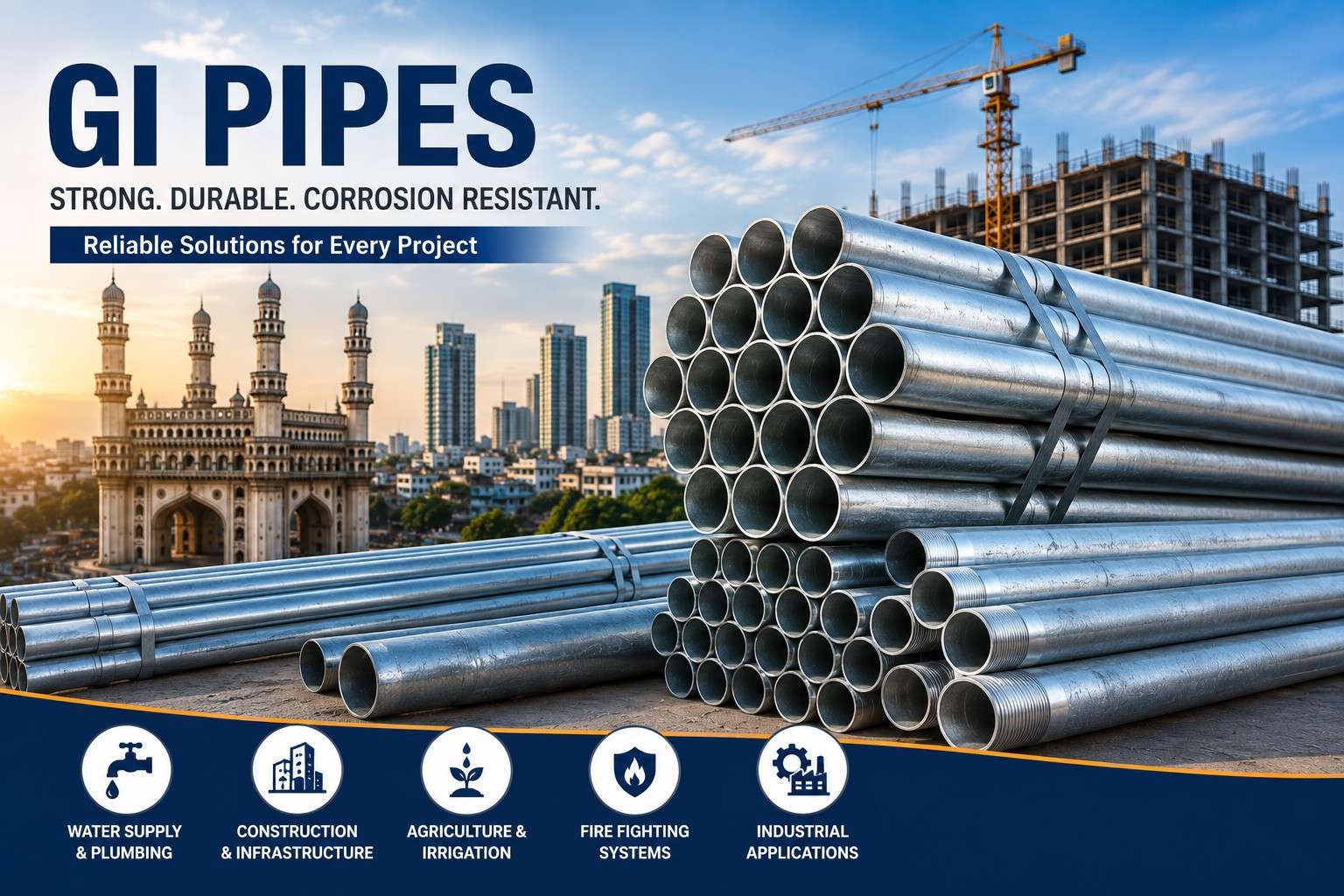
Galvanized Iron (GI) pipes are widely used in plumbing, water supply, construction, agriculture, fencing, fire protection, and industrial applications. Their zinc coating helps protect the underlying steel from corrosion, making them suitable for applications where exposure to moisture is a concern.
If you are searching for GI Pipe Suppliers in Hyderabad, choosing the right supplier involves more than comparing the price per kg. Pipe diameter, wall thickness, grade, coating, length, brand, quantity, application, and delivery requirements should all be considered before purchasing.
This guide explains the different types of GI pipes, common sizes, applications, price factors, and what to check when selecting a GI pipe supplier in Hyderabad.
Quick Answer
GI Pipe Suppliers in Hyderabad provide galvanized steel pipes in different sizes, thicknesses, grades, and specifications for plumbing, water supply, construction, agriculture, fencing, and industrial applications. Before buying, verify the pipe specification, dimensions, zinc coating, applicable standard, brand, quantity, and quality documentation where required. SteelonCall helps customers source GI pipes and other steel products with competitive quotations and delivery assistance across Hyderabad.
What Is a GI Pipe?
A GI pipe is a steel pipe coated with zinc to improve its resistance to corrosion.
The zinc coating provides a protective barrier between the steel and the surrounding environment. Zinc can also provide sacrificial protection to exposed areas of the steel surface.
Because of this corrosion resistance, GI pipes are commonly used in applications involving:
-
Water supply
-
Plumbing
-
Irrigation
-
Construction
-
Fencing
-
Agricultural structures
-
Fire protection
-
Industrial installations
The appropriate GI pipe should be selected according to the pressure, environment, fluid, temperature, structural requirements, and applicable specifications of the project.
How Are GI Pipes Made?
GI pipes are generally manufactured from steel pipe that receives a zinc coating.
Depending on the manufacturing route, galvanizing can be performed using processes such as hot-dip galvanizing. The zinc coating provides additional protection to the steel surface.
The performance of a galvanized pipe depends on factors such as:
-
Steel quality
-
Zinc coating
-
Pipe thickness
-
Manufacturing quality
-
Environmental exposure
-
Handling and installation
For demanding applications, buyers should verify the manufacturer's specification and applicable standard rather than relying only on the term "GI pipe."
Types of GI Pipes
GI pipes can differ based on their manufacturing process, dimensions, coating, grade, and intended application.
| GI Pipe Type | Common Applications | Key Consideration |
|---|---|---|
| GI Water Pipes | Water supply and plumbing | Diameter, thickness & pressure requirement |
| GI Plumbing Pipes | Residential & commercial plumbing | Size, coating & specification |
| GI Structural Pipes | Fencing and light structures | Strength and dimensions |
| GI Scaffolding Pipes | Temporary structures and scaffolding | Load requirements and dimensions |
| GI Industrial Pipes | Industrial applications | Grade, thickness & application |
The exact availability of these products can vary between manufacturers and suppliers.
Common GI Pipe Sizes
GI pipes are available in different nominal sizes and wall thicknesses.
Common nominal sizes include:
-
½ inch
-
¾ inch
-
1 inch
-
1¼ inch
-
1½ inch
-
2 inch
-
2½ inch
-
3 inch
-
4 inch
-
5 inch
-
6 inch
The actual outside diameter and wall thickness can vary according to the applicable pipe standard.
For plumbing and water supply applications, the required pipe size should be selected based on flow requirements, pressure, length, fittings, and system design rather than simply choosing a larger diameter.
GI Pipe Applications in Hyderabad
GI pipes are used across residential, commercial, agricultural, and industrial projects.
Water Supply and Plumbing
GI pipes can be used in suitable water distribution and plumbing applications where their corrosion resistance and mechanical properties are advantageous.
Applications include:
-
Residential plumbing
-
Commercial buildings
-
Water distribution
-
Utility installations
Construction
GI pipes can be used for:
-
Railings
-
Fencing
-
Light structural applications
-
Temporary structures
-
Supports
Agriculture
GI pipes are used in agricultural infrastructure such as:
-
Irrigation systems
-
Farm fencing
-
Greenhouse structures
-
Water distribution
The pipe specification should match the pressure and environmental conditions of the application.
Fire Protection
Certain galvanized pipe products can be used in fire protection systems where they meet the applicable system specifications and approvals.
Industrial Applications
GI pipes may also be used in:
-
Factories
-
Workshops
-
Utility systems
-
Engineering applications
-
Equipment support structures
GI Pipe vs MS Pipe
One of the common questions when purchasing steel pipes is whether to choose GI or MS pipes.
| Feature | GI Pipe | MS Pipe |
|---|---|---|
| Coating | Zinc coated | Generally uncoated |
| Corrosion Resistance | Better surface protection | Requires suitable protection in corrosive environments |
| Common Uses | Plumbing, water supply, fencing | Fabrication, structural & general engineering |
| Maintenance | Generally lower surface maintenance | May require painting/coating |
| Cost | Usually higher due to galvanizing | Generally lower initially |
The better option depends on the project's application, environment, design requirements, and budget.
What Is Zinc Coating in GI Pipes?
Zinc coating is one of the most important features of a galvanized pipe.
The coating helps protect the steel from corrosion. However, the level of protection depends on the coating specification, environmental conditions, handling, and service life requirements.
When purchasing GI pipes, ask the supplier about:
-
Zinc coating specification
-
Coating mass where applicable
-
Pipe grade
-
Wall thickness
-
Applicable standard
-
Manufacturer
For highly corrosive environments, the required coating and material specification should be confirmed with the project engineer.
Factors Affecting GI Pipe Prices in Hyderabad
The GI pipe price in Hyderabad can vary depending on several factors.
1. Pipe Diameter
Larger diameter pipes generally require more material and may have a higher total cost.
2. Wall Thickness
A thicker pipe generally weighs more per metre and therefore affects the overall price.
3. Zinc Coating
The galvanizing specification can influence the cost of the finished product.
4. Brand
Prices can vary between manufacturers based on specifications, availability, and market demand.
5. Quantity
Bulk orders may receive different commercial terms compared with smaller purchases.
6. Steel Market Conditions
Changes in steel prices can affect the cost of GI pipes.
7. Transportation
Delivery distance and logistics can influence the final landed price.
For a meaningful comparison, request quotations for the same diameter, thickness, grade, coating, brand, quantity, and delivery location.
How to Choose GI Pipe Suppliers in Hyderabad
Before placing your order, evaluate the supplier using the following checklist.
1. Verify Pipe Specifications
Confirm:
-
Nominal diameter
-
Outside diameter where applicable
-
Wall thickness
-
Length
-
Grade
-
Zinc coating
-
Applicable standard
2. Check Product Quality
For important projects, ask about manufacturer details and relevant quality documentation.
3. Check Stock Availability
Confirm that the supplier has the required size and quantity available or can arrange it within your required timeframe.
4. Compare Complete Quotations
Don't compare only the basic pipe price. Consider:
-
Product price
-
Taxes
-
Transportation
-
Loading/unloading
-
Delivery charges
-
Other applicable costs
5. Evaluate Delivery
For construction projects, delayed pipe delivery can affect plumbing, fabrication, and installation schedules.
Choose a supplier capable of delivering to your project location within the required timeframe.
GI Pipe Weight and Price Calculation
GI pipes are commonly sold based on weight, length, or piece, depending on the supplier and product.
Theoretical pipe weight can be estimated using the pipe's dimensions and steel density. However, actual supplied weight can vary according to manufacturing tolerances and the applicable standard.
When comparing quotations, confirm whether the quoted price is:
-
Per kg
-
Per metre
-
Per pipe
-
Including or excluding taxes
-
Including or excluding transportation
This avoids confusion when comparing different GI Pipe Suppliers in Hyderabad.
Why Buy GI Pipes Online in Hyderabad?
Online steel procurement can make sourcing GI pipes more convenient.
Customers can:
-
Submit product requirements
-
Specify pipe sizes
-
Request quotations
-
Compare available options
-
Purchase in bulk
-
Coordinate delivery
-
Get procurement assistance
This is particularly useful for contractors, builders, plumbers, fabricators, manufacturers, and businesses with recurring steel requirements.
Why Choose SteelonCall for GI Pipes in Hyderabad?
SteelonCall helps simplify steel procurement by providing customers with access to a wide range of construction and industrial steel products.
Benefits of Choosing SteelonCall
-
GI pipe product enquiries
-
Multiple steel brands and products
-
Competitive quotations
-
Bulk order support
-
Transparent procurement process
-
Expert procurement assistance
-
Delivery support across Hyderabad
-
Customer support
Whether you need GI pipes for plumbing, water supply, construction, fencing, agriculture, or industrial applications, SteelonCall can help you source the required material based on your specifications.
GI Pipe Buying Checklist
Before confirming your order, verify:
✔ Pipe type
✔ Nominal diameter
✔ Wall thickness
✔ Length
✔ Grade
✔ Zinc coating specification
✔ Applicable standard
✔ Brand/manufacturer
✔ Quantity
✔ Quality documentation where required
✔ Complete delivered price
✔ Delivery schedule
This checklist helps you compare suppliers more accurately and reduce the risk of ordering pipes that do not match your project requirements.
Conclusion
Choosing reliable GI Pipe Suppliers in Hyderabad is important when sourcing galvanized steel pipes for construction, plumbing, water supply, agriculture, fencing, and industrial applications.
Before purchasing, consider the pipe diameter, wall thickness, grade, zinc coating, applicable standard, quantity, brand, price, and delivery requirements.
Instead of selecting a supplier based only on the lowest price, compare quotations for identical specifications and evaluate the complete delivered cost.
SteelonCall helps builders, contractors, fabricators, plumbers, manufacturers, and businesses source GI pipes and other steel products with competitive quotations, bulk procurement assistance, and delivery support across Hyderabad.
FAQs
1. What are GI pipes used for?
GI pipes are commonly used for water supply, plumbing, irrigation, fencing, construction, agricultural structures, fire protection, and industrial applications.
2. What sizes of GI pipes are available?
Common nominal sizes include ½ inch, ¾ inch, 1 inch, 1¼ inch, 1½ inch, 2 inch, 2½ inch, 3 inch, 4 inch, 5 inch, and 6 inch. Availability varies by manufacturer and supplier.
3. What factors affect GI pipe prices in Hyderabad?
GI pipe prices depend on diameter, wall thickness, grade, zinc coating, brand, quantity, current steel prices, transportation, and delivery location.
4. Are GI pipes better than MS pipes?
Neither is universally better. GI pipes provide zinc-coated corrosion protection and are suitable for many applications involving moisture, while MS pipes may be more economical for applications where additional surface protection can be provided.
5. How do I choose a GI pipe supplier?
Choose a supplier that provides the required pipe specifications, genuine products, transparent quotations, quality documentation where applicable, stock availability, and reliable delivery.
6. Are GI pipes rust-proof?
GI pipes are corrosion-resistant rather than permanently rust-proof. Their zinc coating protects the steel, but the service life depends on coating quality, environment, installation, and handling.
7. Can I buy GI pipes online in Hyderabad?
Yes. Customers can submit their requirements online, request quotations, compare available options, and arrange delivery through steel procurement platforms.
8. Why choose SteelonCall?
SteelonCall provides GI pipe enquiries, multiple steel products and brands, competitive quotations, bulk order support, procurement assistance, and delivery support across Hyderabad.
Need a price for your requirement?
Share your grade, diameter and quantity — our steel experts come back with a live quote and delivery timeline.