
SteelonCall Journal
GI Pipe Suppliers in Thiruvananthapuram: A Complete Guide to Choosing the Right GI Pipes
Steeloncall
2 October 2026 · 15 min read
On this page
- What Are GI Pipes?
- Why Are GI Pipes Popular for Construction?
- What Are GI Pipes Used For?
- How to Choose GI Pipe Suppliers in Thiruvananthapuram
- GI Pipe Sizes Available for Construction
- GI Pipe Thickness and Class
- GI Pipe Price in Thiruvananthapuram
- How to Compare GI Pipe Prices
- Popular GI Pipe Brands
- How to Check Genuine GI Pipes
- GI Pipes for Water Supply in Thiruvananthapuram
- GI Pipes for Irrigation
- GI Pipes for Fencing and Fabrication
- GI Pipes vs MS Pipes
- GI Pipes vs ERW Pipes
- Buying GI Pipes Online in Thiruvananthapuram
- Why Buy GI Pipes Through SteelonCall?
- Benefits of Buying GI Pipes Online
- GI Pipe Buying Checklist
- Common Mistakes When Buying GI Pipes
- How to Store GI Pipes
- How Much GI Pipe Do You Need?
- GI Pipe Procurement for Large Construction Projects
- Why Local Delivery Matters in Thiruvananthapuram
- Final Thoughts
- Frequently Asked Questions
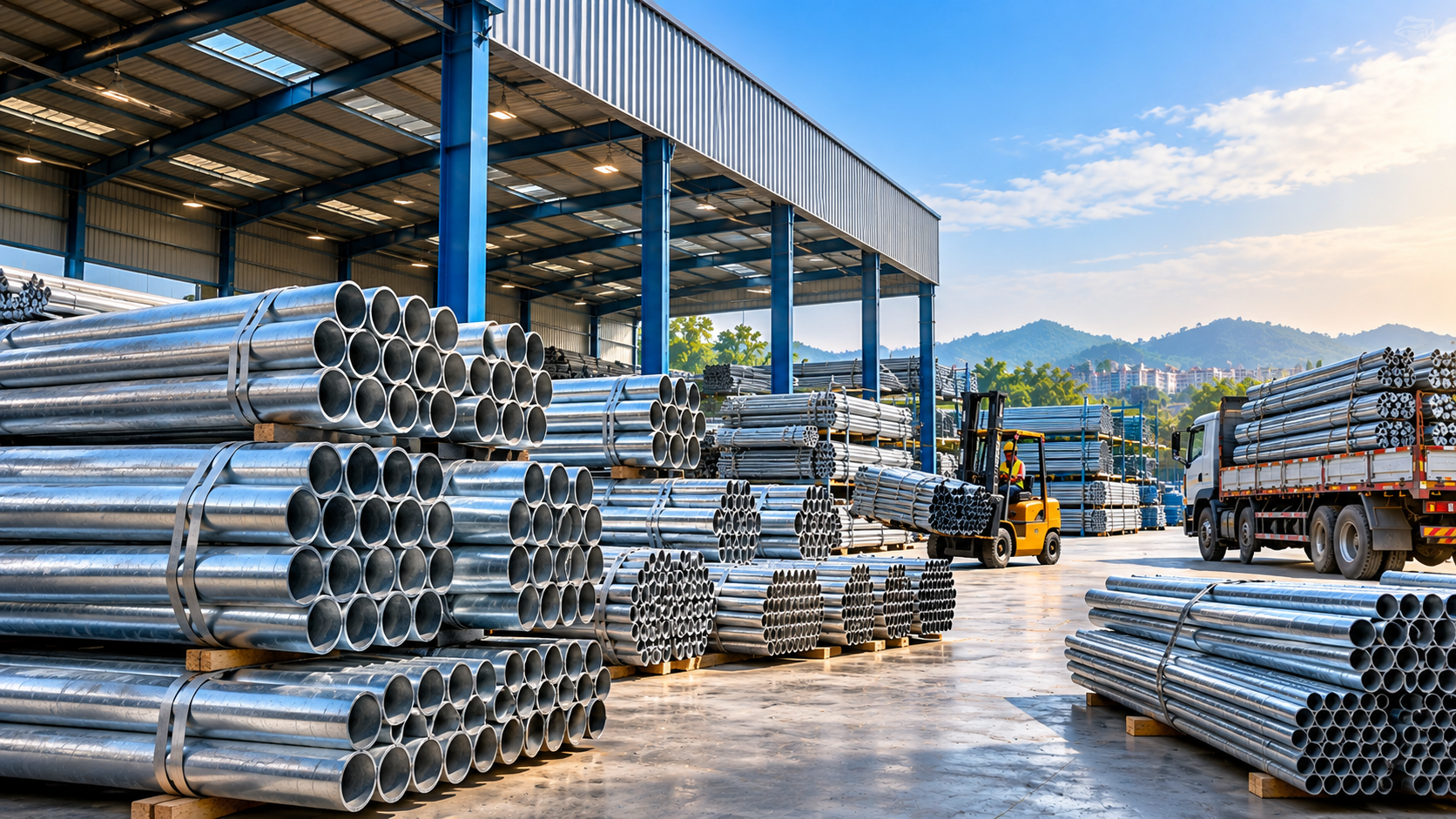
GI pipes are widely used in construction, plumbing, water supply, irrigation, fencing, fabrication and industrial applications. Their zinc coating provides protection against corrosion, making them suitable for many indoor and outdoor applications.
If you are searching for GI Pipe Suppliers in Thiruvananthapuram, you may be looking for pipes for a new house, apartment, commercial building, industrial project, agricultural application or fabrication work.
But choosing a GI pipe supplier is not simply about finding the lowest price.
You need to consider the pipe size, thickness, grade, galvanizing specification, brand, quantity, quality, price and delivery before placing an order.
A reliable supplier should also be able to provide genuine products, proper documentation and dependable delivery.
SteelonCall makes construction steel procurement easier by helping buyers identify their requirements, compare suitable products and arrange steel delivery.
Finding reliable GI Sheet Dealers is important for builders, contractors, fabricators, warehouse developers, and industrial companies looking for galvanized sheets for roofing, fabrication, structural, and other construction applications. A dependable dealer can help ensure the required sheet specifications, thickness, dimensions, quantities, product availability, and timely delivery. SteelOnCall provides a convenient platform for sourcing GI sheets and other steel products based on your required specifications, quantity, and delivery location.
This guide explains how to choose the right GI Pipe Suppliers in Thiruvananthapuram, what GI pipes are used for, how prices are determined and what you should check before buying.
What Are GI Pipes?
GI stands for Galvanized Iron.
In modern manufacturing, GI pipes are generally steel pipes coated with zinc. The zinc coating helps protect the steel underneath from corrosion.
This makes GI pipes useful in environments where the material may come into contact with moisture or outdoor conditions.
GI pipes are commonly used for:
-
Water supply
-
Plumbing
-
Irrigation
-
Fencing
-
Railings
-
Handrails
-
Fabrication
-
Agricultural applications
-
Industrial applications
-
General construction
The right pipe depends on the application.
For example, a pipe used for fencing may have different requirements from one used for a water supply system.
Therefore, before contacting GI Pipe Suppliers in Thiruvananthapuram, identify exactly where the pipe will be used.
Why Are GI Pipes Popular for Construction?
GI pipes remain popular because they combine the strength of steel with the additional corrosion protection provided by galvanization.
Corrosion Protection
The zinc coating helps protect the steel from environmental exposure.
Strength
Steel provides good mechanical strength for many applications.
Durability
When correctly specified and installed, GI pipes can provide long service life.
Versatility
They can be used across residential, commercial, agricultural and industrial projects.
Outdoor Suitability
Galvanized pipes can be suitable for many outdoor applications where moisture exposure is expected.
Easy Availability
GI pipes are available in various sizes and specifications from established manufacturers and suppliers.
For a broader understanding of steel pipes and their applications, you can also read SteelonCall's guide on steel pipe dealers and different types of steel pipes.
What Are GI Pipes Used For?
One reason buyers search for GI Pipe Suppliers in Thiruvananthapuram is the wide range of applications.
1. Water Supply
GI pipes have traditionally been used for water distribution systems.
The appropriate pipe size and specification depend on the required flow, pressure and project design.
2. Plumbing
GI pipes can be used in certain plumbing applications for residential and commercial buildings.
3. Irrigation
GI pipes can be used for agricultural and irrigation systems where suitable specifications are selected.
4. Fencing
GI pipes are commonly used for:
-
Boundary fencing
-
Gate frames
-
Fence posts
-
Railings
-
Protective barriers
5. Fabrication
Fabricators use GI pipes to manufacture various structures and frameworks.
6. Industrial Applications
GI pipes may be used in factories, warehouses, workshops and other industrial environments.
7. Handrails and Railings
Their combination of strength and corrosion protection makes them useful for many railing applications.
If your project requires non-galvanized mild steel pipes instead, SteelonCall also has a detailed guide explaining the uses and applications of MS pipes.
How to Choose GI Pipe Suppliers in Thiruvananthapuram
Not every supplier will offer the same product quality, availability or service.
When comparing GI Pipe Suppliers in Thiruvananthapuram, consider these factors.
1. Product Quality
Check whether the supplied pipe meets the required specifications.
2. Manufacturer
For important construction projects, consider established manufacturers with consistent product quality.
3. Pipe Diameter
The diameter should match the engineering requirement.
4. Wall Thickness
The required thickness depends on the application and expected loads or pressure.
5. Galvanizing
Check the applicable galvanizing specification for your project.
6. Certification
Where required, verify applicable BIS/ISI compliance and documentation.
7. Availability
Confirm that the supplier can provide the required sizes and quantity.
8. Price
Compare equivalent products rather than comparing random quotations.
9. Delivery
Make sure the supplier can deliver the material to your Thiruvananthapuram project site.
10. Documentation
Proper invoices and relevant quality documentation are important for project records.
GI Pipe Sizes Available for Construction
GI pipes are available in different nominal sizes.
Common sizes include:
-
15 mm
-
20 mm
-
25 mm
-
32 mm
-
40 mm
-
50 mm
-
65 mm
-
80 mm
-
100 mm
Larger sizes may also be available depending on the manufacturer and application.
However, don't select a GI pipe size simply because it is commonly used.
The correct size depends on the application.
For example:
Water supply: Flow and pressure requirements matter.
Irrigation: Flow rate and distance matter.
Fencing: Structural strength and height matter.
Fabrication: Design loads and dimensions matter.
Always confirm the required specification before placing an order.
GI Pipe Thickness and Class
Diameter is only one part of pipe selection.
Wall thickness is equally important.
Two pipes can have the same nominal diameter but different wall thicknesses.
A thicker pipe may provide greater mechanical strength, but it can also weigh more and cost more.
The appropriate thickness depends on:
-
Application
-
Diameter
-
Pressure
-
Load
-
Installation
-
Environmental conditions
-
Project specifications
When asking GI Pipe Suppliers in Thiruvananthapuram for a quotation, provide both the required diameter and thickness/class wherever applicable.
This prevents suppliers from quoting different specifications that are difficult to compare.
GI Pipe Price in Thiruvananthapuram
One of the most common searches related to GI pipes is GI pipe price in Thiruvananthapuram.
However, there is no single price applicable to every GI pipe.
The price can change depending on:
-
Diameter
-
Wall thickness
-
Length
-
Galvanizing specification
-
Brand
-
Quantity
-
Steel market conditions
-
Supplier stock
-
Freight
-
Delivery location
-
Applicable taxes
For this reason, don't rely on an old online price when planning a large purchase.
Instead, provide your exact specification and request a current quotation.
How to Compare GI Pipe Prices
Suppose you receive quotations from three suppliers.
|
Supplier |
Material Price |
Freight |
Other Charges |
Final Cost |
|
Supplier A |
₹X |
₹X |
₹X |
₹X |
|
Supplier B |
₹X |
₹X |
₹X |
₹X |
|
Supplier C |
₹X |
₹X |
₹X |
₹X |
Before comparing the prices, make sure every supplier is quoting for the same:
-
Brand
-
Diameter
-
Thickness
-
Length
-
Galvanizing specification
-
Quantity
-
Delivery location
Then calculate the total landed cost.
Total Landed Cost = Material Cost + Applicable Taxes + Freight + Other Applicable Charges
This is much more useful than simply selecting the supplier offering the lowest basic rate.
SteelonCall's existing GI pipe content similarly recommends comparing factors such as quality, brand, thickness, landed price, availability, delivery and documentation rather than looking at price alone. (SteelonCall)
Popular GI Pipe Brands
Depending on availability and project requirements, buyers may find GI pipes from established manufacturers and brands such as:
-
Tata Steel
-
Jindal Star
-
APL Apollo
-
Apollo Pipes
-
Surya Roshni
-
Hi-Tech Pipes
-
Zenith Steel
-
Asian Tubes
The right brand depends on your project requirements, availability and budget.
Instead of asking only:
"Which is the cheapest GI pipe brand?"
ask:
"Which GI pipe meets my required specification at a competitive delivered cost?"
This is a better procurement approach.
How to Check Genuine GI Pipes
Quality verification should begin when the material reaches your site.
Check the following:
Manufacturer Marking
Look for available manufacturer identification and product markings.
Pipe Diameter
Verify that the diameter matches your order.
Wall Thickness
Check the specified thickness.
Galvanized Surface
Inspect the zinc coating for obvious defects or damage.
Length
Confirm that the supplied lengths match the purchase order.
Quantity
Check the delivered quantity.
Invoice
Keep the proper purchase invoice.
Quality Documents
For applicable projects, request test certificates or other relevant documents.
For technical procurement, you should also verify whether the product needs to comply with a specific Indian Standard.
The Bureau of Indian Standards provides information on Indian Standards and certification.
GI Pipes for Water Supply in Thiruvananthapuram
If you're purchasing GI pipes for a water supply system, don't choose the pipe based solely on availability.
You should consider:
-
Required flow
-
Water pressure
-
Pipe diameter
-
Wall thickness
-
Jointing system
-
Installation conditions
-
Applicable standards
-
Water quality
For a residential house, the plumbing design should determine the required pipe sizes.
For an apartment, hotel, hospital or commercial building, the requirements can be considerably larger.
This is why it is useful to provide your plumbing BOQ or material schedule when requesting a quotation.
GI Pipes for Irrigation
GI pipes can also be used in agricultural and irrigation applications.
Depending on the system, they may be used for:
-
Water distribution
-
Farm irrigation
-
Sprinkler systems
-
Water lines
-
Agricultural structures
The required diameter depends on the water flow and pressure.
For longer irrigation networks, proper hydraulic calculations can help determine the suitable pipe diameter.
GI Pipes for Fencing and Fabrication
GI pipes are particularly useful for outdoor fencing and fabrication applications.
They can be used for:
-
Compound fencing
-
Gates
-
Handrails
-
Railings
-
Barriers
-
Framework
-
Supports
-
Fabricated structures
The pipe diameter and thickness should be selected based on the expected load.
For example, a light-duty decorative railing may not require the same specification as a heavy-duty industrial barrier.
GI Pipes vs MS Pipes
GI pipes and MS pipes are both steel products, but their surface treatment is different.
GI Pipes
GI pipes have a zinc coating that provides additional corrosion protection.
MS Pipes
Conventional MS pipes generally do not have a galvanized zinc coating.
MS pipes are widely used for:
-
Fabrication
-
Structural work
-
Industrial applications
-
Fencing
-
Construction
-
General engineering
If you're deciding between the two, consider:
Application + Environment + Corrosion Exposure + Strength + Cost + Maintenance
SteelonCall's guide to MS pipe uses and applications provides more information about where MS pipes are commonly used.
GI Pipes vs ERW Pipes
Another common source of confusion is the difference between GI and ERW pipes.
GI refers primarily to the galvanized coating, while ERW refers to a manufacturing process—Electric Resistance Welding.
Therefore, these terms are not necessarily direct alternatives.
A pipe can be manufactured using a particular process and subsequently galvanized.
For structural and fabrication projects, understanding the manufacturing method and required standard is important.
If you're comparing pipe specifications for a project, see SteelonCall's MS Pipe vs ERW Pipe buying guide.
Buying GI Pipes Online in Thiruvananthapuram
Traditional steel procurement often involves contacting several suppliers.
The process may look like:
Search → Call Suppliers → Ask Prices → Check Availability → Compare → Arrange Transport → Follow Up
For homeowners, contractors and project managers, this can take considerable time.
Online steel procurement can simplify the initial process.
You can share:
-
Product
-
Diameter
-
Thickness
-
Quantity
-
Brand preference
-
Delivery location
The supplier can then understand your requirement more clearly.
If you're planning to buy construction materials online, our guide to buying construction steel online can help you understand the process.
Why Buy GI Pipes Through SteelonCall?
SteelonCall helps simplify construction material procurement for homeowners, contractors, builders and project teams.
Multiple Product Options
Explore suitable steel products based on your requirement.
Leading Brands
Access products from established manufacturers depending on availability.
Competitive Pricing
Compare quotations based on equivalent specifications.
Bulk Order Support
Suitable for larger residential, commercial and industrial requirements.
Online Procurement
Share your requirements digitally instead of visiting multiple suppliers.
Delivery Planning
Coordinate material delivery according to your project schedule.
Transparent Documentation
Maintain invoices and relevant purchase records.
Benefits of Buying GI Pipes Online
Online procurement can make the buying process more convenient.
Save Time
Reduce repeated supplier calls and physical visits.
Compare Options
Compare equivalent specifications more easily.
Share Exact Requirements
Provide your diameter, thickness and quantity clearly.
Simplify Bulk Procurement
Large requirements can be discussed in one procurement process.
Plan Delivery
Coordinate delivery with your project schedule.
Reduce Procurement Errors
A written specification helps avoid misunderstandings.
SteelonCall's GI pipe supplier content highlights similar advantages, including multiple brands, competitive pricing, bulk order support, online ordering and delivery assistance.
GI Pipe Buying Checklist
Before placing an order with GI Pipe Suppliers in Thiruvananthapuram, confirm:
-
Product type
-
Brand/manufacturer
-
Nominal diameter
-
Wall thickness/class
-
Pipe length
-
Galvanizing specification
-
Applicable standard
-
Quantity
-
Current quotation
-
Taxes
-
Freight
-
Delivery location
-
Delivery date
-
Invoice
-
Test/quality certificate where applicable
-
Product markings
This simple checklist can prevent many common procurement problems.
Common Mistakes When Buying GI Pipes
Choosing Only the Lowest Price
A cheaper quotation may involve a different specification.
Not Mentioning Thickness
Diameter alone isn't enough to identify the exact pipe requirement.
Ignoring the Application
A fencing pipe may not be suitable for a pressurised water system.
Comparing Different Brands Without Comparing Specifications
A meaningful comparison requires equivalent specifications.
Ignoring Freight
A lower material price can become more expensive after transportation.
Not Checking Quality Documents
For technical projects, proper documentation may be important.
Ordering Without Checking Availability
Confirm stock before committing to your construction schedule.
Not Inspecting the Delivery
Always verify the material before installation.
How to Store GI Pipes
Proper storage is important before installation.
Keep Pipes Above Ground
Use suitable supports rather than placing pipes directly on wet ground.
Avoid Standing Water
Do not allow water to remain around or between stored pipes.
Provide Drainage
Choose a storage area where rainwater can drain away.
Avoid Coating Damage
Handle pipes carefully to reduce damage to the galvanized surface.
Separate Different Sizes
Keep different pipe diameters and specifications clearly separated.
Follow Manufacturer Guidelines
Always follow specific storage instructions provided with the product.
How Much GI Pipe Do You Need?
The quantity depends on your application.
For Plumbing
Consider:
-
Number of outlets
-
Pipe routes
-
Horizontal runs
-
Vertical runs
-
Diameter
-
Building layout
For Fencing
Consider:
-
Number of posts
-
Post spacing
-
Post height
-
Horizontal framework
-
Gate requirements
For Fabrication
Use the fabrication drawing or cutting list to calculate the required quantity.
For larger projects, prepare a detailed material schedule before requesting quotations.
GI Pipe Procurement for Large Construction Projects
Large projects require more careful planning.
An apartment, commercial building, factory or industrial facility may need:
-
Multiple pipe diameters
-
Different thicknesses
-
Large quantities
-
Multiple delivery schedules
-
Quality documentation
-
Material inspection
-
Site storage
Instead of ordering everything at once, project teams can schedule procurement around construction progress.
This can help reduce:
-
Excess stock
-
Site congestion
-
Material handling
-
Working capital pressure
-
Last-minute procurement
A reliable supplier should be able to understand your project schedule and delivery requirements.
Why Local Delivery Matters in Thiruvananthapuram
When comparing GI Pipe Suppliers in Thiruvananthapuram, delivery should be part of the buying decision.
The final cost can depend on:
-
Distance from supplier
-
Quantity
-
Vehicle type
-
Delivery location
-
Loading/unloading
-
Road accessibility
-
Delivery schedule
For this reason, always provide your exact delivery location when requesting a quotation.
A supplier may offer a lower basic price but a higher delivered price.
Final Thoughts
Choosing the right GI Pipe Suppliers in Thiruvananthapuram requires more than comparing the lowest quotation.
The best buying decision considers:
Application → Diameter → Thickness → Galvanizing → Brand → Quality → Price → Freight → Delivery
Whether you need GI pipes for plumbing, water supply, irrigation, fencing, fabrication or industrial applications, start by defining your exact requirement.
Then compare suppliers using the same specifications.
At SteelonCall, we make construction steel procurement easier by helping buyers share their requirements, explore suitable products, compare options and arrange delivery.
Looking for GI Pipe Suppliers in Thiruvananthapuram? Share your required pipe size, thickness, quantity and delivery location with SteelonCall and start your procurement today.
Frequently Asked Questions
1. Who are the best GI Pipe Suppliers in Thiruvananthapuram?
The best supplier is one that can provide the required GI pipe specification, genuine products, suitable quality documentation, competitive pricing and dependable delivery.
2. What are GI pipes used for?
GI pipes are commonly used for plumbing, water supply, irrigation, fencing, fabrication, railings and various industrial applications.
3. What is the GI pipe price in Thiruvananthapuram?
GI pipe prices depend on diameter, thickness, brand, galvanizing specification, quantity, market conditions, freight and applicable taxes.
4. What GI pipe sizes are available?
Common nominal sizes include 15mm, 20mm, 25mm, 32mm, 40mm, 50mm, 65mm, 80mm and 100mm, with availability varying by manufacturer.
5. How do I choose the correct GI pipe size?
Choose the size according to the application. Water systems should consider flow and pressure, while fencing and fabrication should consider structural requirements.
6. Are GI pipes suitable for water supply?
GI pipes have traditionally been used for water supply and plumbing. The correct product should be selected according to the project's engineering requirements and applicable standards.
7. Are GI pipes suitable for outdoor applications?
Yes. Galvanized pipes can be suitable for many outdoor applications because the zinc coating provides corrosion protection.
8. How can I check GI pipe quality?
Check manufacturer markings, diameter, wall thickness, galvanized coating, length, quantity, invoice and relevant quality documentation.
9. What is the difference between GI and MS pipes?
GI pipes have a zinc coating for additional corrosion protection, while conventional MS pipes generally do not have a galvanized coating.
10. What is the difference between GI and ERW pipes?
GI refers to galvanization, while ERW refers to the pipe manufacturing process. They describe different characteristics of a pipe and are not necessarily direct alternatives.
11. Can I buy GI pipes online in Thiruvananthapuram?
Yes. Online procurement allows you to submit your exact product, size, thickness, quantity and delivery requirements and begin the purchasing process digitally.
12. Can SteelonCall supply GI pipes for bulk projects?
Yes. Buyers can share their GI pipe specification, quantity and delivery location with SteelonCall to begin the procurement process.
Need a price for your requirement?
Share your grade, diameter and quantity — our steel experts come back with a live quote and delivery timeline.