
SteelonCall Journal
Difference Between MS Pipe and ERW Pipe: A Buyer's Guide (2026)
Understand the difference between MS pipe and ERW pipe for construction and fabrication. Get sourcing clarity, verified suppliers, and bulk support.
Steeloncall
3 February 2026 · 14 min read
On this page
- A Quick Glance
- Why Buyers Confuse MS Pipe and ERW Pipe in Projects
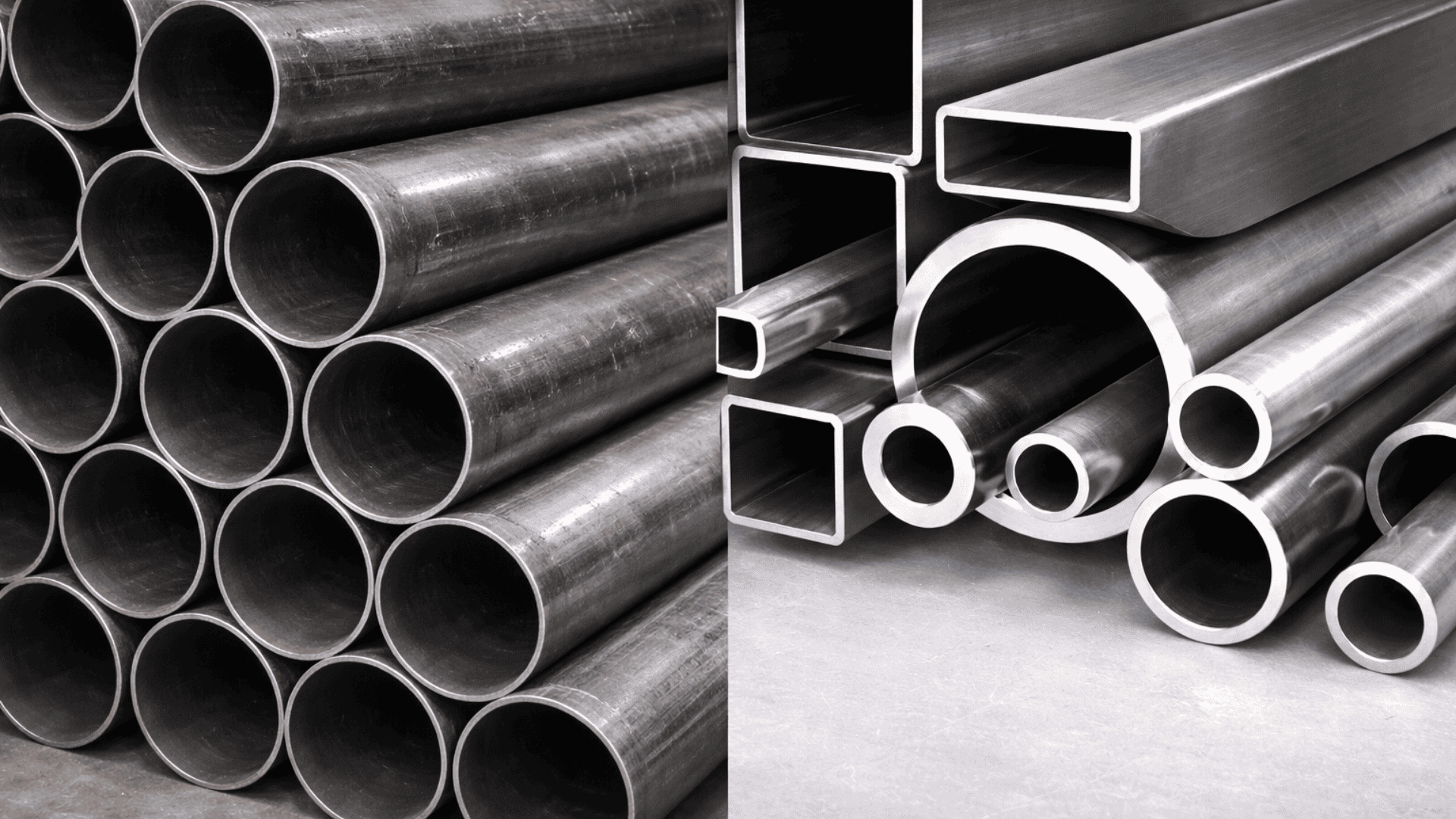
- What Is an MS Pipe and Where Is It Commonly Used
- What Is an ERW Pipe and Where Is It Preferred
- MS Pipe vs ERW Pipe: Side-by-Side Buyer Comparison
- How to Choose Between MS Pipe and ERW Pipe for Your Project
- Common Mistakes When Selecting MS vs ERW Pipes (and How to Fix Them)
- Regional Buying Context: MS vs ERW Pipes in South India
- How SteelonCall Helps Buyers Source the Right Pipes with Confidence
- Conclusion
- FAQs
Choosing between MS pipe and ERW pipe often sounds simple until work starts on site. What looks like a minor material decision can quickly turn into fabrication issues, cost overruns, or delays when the pipe supplied doesn't meet the project's actual requirements.
The confusion usually begins with terminology and ends with adjustments that could have been avoided. This guide cuts through that uncertainty. It explains the difference between MS pipe and ERW pipe in practical, buyer-focused terms, helping you understand where each one fits and why.
By the end, you'll be able to make a clear, confident choice based on application, not assumptions, and move forward without second-guessing your decision.
A Quick Glance
-
MS and ERW pipes are defined differently. MS is a material category; ERW is a manufacturing process.
-
MS pipes are suitable for temporary and non-critical uses. Ideal where tight tolerances and structural consistency aren't required.
-
ERW pipes are better for structural and fabrication work. They offer uniform dimensions and predictable performance.
-
Specification clarity prevents procurement errors. Always define BIS standard, grade, class, and supply length.
-
Right pipe selection reduces rework and delays. Application-based choices improve execution and site efficiency.
Before comparing, it’s important to understand why MS and ERW pipes are often mistaken for the same product in project discussions.
Why Buyers Confuse MS Pipe and ERW Pipe in Projects
In many project specs, "MS pipe" is used as a catch-all term for mild-steel pipes without distinguishing how they're made or how they perform in use.
-
Mild steel is simply low-carbon steel that can be produced using various manufacturing processes, depending on application requirements.
-
ERW stands for Electric Resistance Welded, a specific way of making a pipe by forming a steel strip into a tube and fusing the edges with an electric current along a longitudinal seam.
Because both ERW and other mild-steel pipe types may be referred to in project circles as "MS pipe," it's easy for buyers to think they're identical.
This confusion matters in practice because ERW pipes offer consistent dimensions and moderate pressure performance through controlled welding, while other mild-steel pipes may be seamless or produced differently with distinct performance profiles.
For contractors and fabricators, understanding this distinction early helps avoid situations where an assumed "MS pipe" doesn't behave as expected when fitted, welded, or loaded on site.
What Is an MS Pipe and Where Is It Commonly Used
An MS pipe is a pipe made from mild steel, a low-carbon steel typically containing 0.05% to 0.25% carbon. The term "MS pipe" describes the material type, not the manufacturing process. This is why MS pipes can be produced through different methods, including welded or seamless processes.
In day-to-day procurement, MS pipes are commonly specified when high-pressure resistance or tight dimensional tolerances are not critical. Because mild steel is easy to cut, weld, and fabricate, MS pipes are widely used for general-purpose construction and light fabrication work.
Some typical applications of MS Pipes include:
-
Scaffolding and temporary support structures
-
Handrails, fencing, and guardrails
-
Light structural frames where the load demand is moderate
-
Utility piping where pressure and precision are not primary concerns
In many residential and mid-scale commercial projects across Andhra Pradesh and Telangana, MS pipes are preferred for temporary and secondary structures due to their availability and cost-effectiveness.
Practical Strength and Cost Considerations
Mild steel offers good ductility and weldability, which makes MS pipes forgiving during fabrication. However, because MS pipes are often sourced without tight manufacturing controls, wall thickness variation and surface finish can vary between batches, especially when procured from mixed suppliers.
For buyers, this means MS pipes are cost-effective for non-critical uses, but they require careful consideration for applications where consistency, alignment, or structural performance matters. This is where confusion with ERW pipes often leads to downstream issues.
To understand when MS pipes may fall short, it's important to examine how ERW pipes differ in terms of manufacturing consistency and performance.
What Is an ERW Pipe and Where Is It Preferred
An ERW pipe is manufactured by electric resistance welding, in which a steel strip is formed into a circular shape, and the longitudinal seam is welded using electric current and pressure. This process produces a continuous, uniform weld without filler material.
Because ERW pipes are produced under controlled manufacturing conditions, they offer greater dimensional consistency and more predictable mechanical performance than MS pipes that are loosely specified.
ERW pipes are typically preferred where uniformity and repeatability matter. Common applications include:
-
Structural frames and columns
-
Industrial sheds and trusses
-
Precision fabrication where alignment is critical
-
Utility pipelines with moderate pressure requirements
In urban construction clusters such as Hyderabad and Bengaluru, ERW pipes are widely used in fabrication yards where tolerance control directly impacts assembly speed and quality.
Consistency, Finish, and Performance Factors
The ERW manufacturing process results in:
-
Uniform wall thickness reducing imbalance during load transfer
-
Smoother internal and external surfaces, aiding fabrication and coating
-
Better weld seam integrity when produced to standard
Welded steel tubes produced under controlled processes can show more consistent mechanical behaviour across batches, which is critical for repeat and bulk orders.
For buyers, this consistency translates into less rework, faster fabrication, and fewer inspection issues, making ERW pipes a safer choice for permanent and load-influencing applications.
Suggested Read: What Are the Uses Of MS Pipes?
With both pipe types clearly defined, the next step is to compare MS pipes and ERW pipes side by side on the factors that directly affect project decisions.
MS Pipe vs ERW Pipe: Side-by-Side Buyer Comparison
Below is a clear, decision-ready comparison that will help buyers choose the right pipe type without having to read technical manuals.
If your project involves load-bearing structures, fabrication accuracy, or repeat bulk orders, focus on the factors related to consistency, standards, and execution risk.
| Decision Factor | MS Pipe | ERW Pipe |
|---|---|---|
|
What the term represents |
Refers to material type (mild steel), not a specific manufacturing process |
Refers to a manufacturing process (Electric Resistance Welding) |
|
Manufacturing control |
Can vary widely depending on source and method |
Produced under controlled conditions with a continuous welded seam |
|
Dimensional consistency |
May vary between batches and suppliers |
High consistency in diameter and wall thickness |
|
Applicable Indian standards |
Not always supplied to a single uniform standard |
Commonly manufactured as per IS 1239 / IS 3589 (BIS) |
|
Surface finish |
Varies; may need additional finishing for fabrication |
Generally smoother, better suited for fabrication and coating |
|
Structural reliability |
Suitable for non-critical or temporary applications |
Preferred for permanent and load-influencing structures |
|
Fabrication performance |
Easier to weld, but alignment issues can arise |
Predictable behaviour during cutting, welding, and assembly |
|
Pressure handling (typical use) |
Limited, application-dependent |
Suitable for low to medium pressure applications when manufactured to standard |
|
Risk of variation in bulk orders |
Higher if sourced from mixed suppliers |
Lower due to process and standardisation |
|
Typical project use |
Scaffolding, handrails, fencing, and temporary works |
Columns, trusses, industrial sheds, fabrication-intensive work |
ERW pipes manufactured to IS standards undergo dimensional and weld-integrity checks that directly affect fit-up accuracy and structural performance. In contrast, loosely specified MS pipes can vary significantly across suppliers, increasing the risk of inspection queries and on-site rework.
For contractors and fabricators working in AP, Telangana, and Karnataka, where fabrication yards often operate on tight timelines, this consistency can make the difference between smooth assembly and repeated corrections.
Once the differences are clear, the next step is choosing the right pipe based on how and where it will be used in your project.
How to Choose Between MS Pipe and ERW Pipe for Your Project
Choosing the right pipe is less about labels and more about application risk. The easiest way to decide between MS pipe and ERW pipe is to consider where the pipe sits in your project: temporary vs permanent, light use vs structural, and simple installation vs precision fabrication.
When projects specify pipes to BIS standards, you're usually pushed toward standardised tolerances and testing requirements.
When MS Pipe Makes Sense
Choose MS pipe when the job is general-purpose and doesn't demand strict dimensional repeatability.
Good-fit uses:
-
Temporary works: scaffolding, barricading, supports
-
Non-critical frames: handrails, fencing, shed accessories
-
Utility runs where pressure and inspection requirements are moderate
Buying check: If the requirement is "MS pipe" but the application is structural, ask whether a BIS grade/standard is required. Otherwise, you risk a mixed-quality supply.
When ERW Pipe Is the Safer Choice
Choose ERW pipe when you need repeatable performance across multiple pieces and minimal fabrication correction.
Best-fit uses:
-
Structural frames, trusses, shed columns, and mezzanine supports
-
Fabrication-heavy work where fit-up speed matters
-
Pipeline applications that require a defined pipe specification
Standards cue: For water and sewage steel pipes, IS 3589 is a common reference (with defined dimensions/requirements). If your project references IS 3589 or a similar standard, an ERW supply that meets the standard is usually the safer option.

Even with the right selection logic, certain procurement mistakes can still derail execution.
Common Mistakes When Selecting MS vs ERW Pipes (and How to Fix Them)
Even when the technical difference between MS pipe and ERW pipe is understood, buyers still make preventable procurement mistakes that add cost and schedule risk. Many errors occur not because of a lack of steel knowledge, but because of gaps in specifications, misalignment of standards, and unclear handling expectations.
The following list highlights common mistakes on construction and fabrication projects and offers alternatives.
Mistake 1: Leaving Standards Undefined in Purchase Orders
Buyers often label pipes simply as "MS" without referencing the specific Indian Standard (e.g., IS 1239 or IS 3589) that governs dimensions, tolerances, and performance. These standards ensure repeatable quality and reduce variation.
-
Fix: Always include the applicable BIS standard code (IS 1239 for basic MS pipes, IS 3589 for ERW pipes) and the required class or tolerance level directly in the purchase order. This removes ambiguity and reduces inspection rejections.
Mistake 2: Overlooking Pipe Length & Tolerance Specifications
ERW pipes supplied under IS 3589 are typically available in single random lengths from about 5 to 7 meters, with straightness and dimensional limits defined. If length expectations aren't locked before ordering, cutting waste and handling issues can arise on-site.
-
Fix: Confirm standard supply lengths and tolerances in advance and align them with yard-handling and transport plans. This reduces cutting loss and improves material flow.
Mistake 3: Mixing Pipe Types Within the Same Scope
Projects that combine MS pipes (generic) with ERW pipes can encounter welding alignment issues and dimensional mismatches due to differences in specifications and wall thickness definitions.
-
Fix: For any continuous structure or load-bearing element, specify a single pipe type and standard throughout the entire scope to maintain fabrication consistency and reduce rework.
Mistake 4: Ignoring Grade Strength Differences
MS pipes under IS 1239 may be manufactured in Fe330 or Fe410 grades, which affect tensile strength and ductility. Choosing a grade without considering structural demands leads to over- or under-specification.
-
Fix: Match the pipe grade to the mechanical requirements of the application (e.g., minimum tensile and yield strength expectations in structural applications) before locking in orders.
Mistake 5: Assuming "Black" or Coated Finish Solves All Performance Issues
Surface finish (black, oiled, or coated) improves corrosion resistance but doesn't address core issues such as dimensional consistency and internal tolerances. Relying on coating to fix underlying specification gaps often results in unexpected quality checks or rejections during inspection.
-
Fix: Treat finish as a secondary attribute. First, confirm standard, grade, wall thickness, and supply tolerance; then specify coating only if needed for environmental protection.
In addition to these mistakes, some selection challenges are amplified by regional demand and supply conditions, especially in South India.
Suggested Read: How Digital Transformation in Steel Industry is Shaping India
Regional Buying Context: MS vs ERW Pipes in South India
In South India, demand for MS and ERW pipes is closely tied to infrastructure buildouts, industrial sheds, and urban construction, which means procurement pressure is often cyclical and deadline-driven.
Worldsteel's Short Range Outlook (Oct 2025) projects India's steel demand to grow around 9% in 2025 and 2026, driven by "all steel-using sectors." This typically tightens lead times for fabricated steel and pipe-linked scopes during peak execution periods.
What does this mean for buyers in AP, Telangana, and Karnataka?
-
Karnataka: The state budget analysis flags an ₹8,000 crore allocation under a dedicated infrastructure development program focused on roads, minor irrigation, and urban infrastructure. More infra work typically increases competition for fabrication inputs, including ERW pipes for frames and support structures.
-
Andhra Pradesh: PRS's state budget analysis shows overall expenditure expansion trends for 2024–25, and further, which align with continued public works activity (where pipes are frequently used for structural, utility, and project logistics requirements).
-
Telangana: Industrial infrastructure development is actively institutionalised through TGIIC, which supports industrial areas. This tends to translate into steady fabrication demand (sheds, mezzanines, frames) where ERW is commonly preferred for consistency.
So, if your project scope involves fabrication yards (Hyderabad/Bengaluru corridors), prioritise ERW pipes where alignment, repeatability, and inspection predictability matter.
If your requirement is temporary or secondary site infrastructure, MS pipes can be practical, but lock the standard, class, and supply length early to avoid variation issues.
During high-execution seasons, reduce procurement risk by confirming:
-
BIS standard reference on PO (where applicable)
-
Supply length expectations and handling constraints
-
Phased delivery plan tied to your fabrication/site calendar
With these regional demand factors clear, the final step is knowing how buyers can source the right pipes through a structured online marketplace model like SteelonCall.
How SteelonCall Helps Buyers Source the Right Pipes with Confidence
Choosing between MS pipe and ERW pipe is only half the decision. The bigger risk lies in sourcing pipes that match the approved standard, size, and application across all deliveries.
SteelonCall's online steel marketplace model is built to reduce this execution risk for construction and fabrication projects.
Here's how SteelonCall supports that through its online marketplace:
-
Verified supplier network (250+): helps reduce spec mismatch risk when ordering pipes repeatedly for fabrication or multi-phase projects.
-
Direct access to trusted manufacturers (Vizag Steel priority where relevant): improves brand-led sourcing consistency when projects require tighter control over what gets delivered.
-
Online steel pricing + requirement-based quote flow: buyers can share pipe requirements and receive pricing online, speeding up approvals and bulk order lock-in.
-
Scale built for project buying: SteelonCall highlights 9,600+ trusted customers and 8,560+ orders processed, indicating repeat buying and bulk-handling capability.
-
Delivery coordination focus: logistics is positioned as end-to-end coordination from dispatch to site delivery, supporting execution timelines across South India.
If you're finalising MS or ERW pipe requirements for a construction or fabrication project, share your specifications and check online pricing with SteelonCall to lock the right pipes with predictable delivery timelines.
Conclusion
Choosing between MS pipe and ERW pipe comes down to application clarity. MS pipes work well for general-purpose and temporary use, while ERW pipes offer greater consistency and reliability for structural and fabrication-intensive work.
Understanding these differences helps buyers avoid misapplication, reduce rework, and plan procurement with fewer execution risks. Once the right pipe type is clear, the next step is sourcing it without surprises in specifications or delivery.
SteelonCall provides an online steel marketplace with verified suppliers and direct access to manufacturers, including Vizag Steel. Check today's latest prices online and secure a supply aligned with project timelines across South India.
FAQs
1. Can ERW pipes replace MS pipes in all construction applications?
No. ERW pipes are better suited for structural and fabrication applications, but MS pipes remain suitable for temporary works and non-critical applications. The choice depends on load, tolerance, and inspection requirements.
2. Are ERW pipes mandatory for projects that require BIS compliance?
Not always, but many BIS standards, such as IS 3589, are commonly met through ERW manufacturing. Projects that specify strict dimensional tolerances or testing often prefer ERW pipes.
3. Do ERW pipes cost significantly more than MS pipes in bulk orders?
The per-kg price may be slightly higher, but ERW pipes often reduce fabrication rework, rejection, and correction time. For large projects, this can lower overall execution cost.
4. How should pipes be specified to avoid confusion during procurement?
Always specify the pipe type, applicable BIS standard, class or wall thickness, length range, and intended application. This prevents mixed or mismatched supplies.
5. Can MS and ERW pipes be mixed within the same project?
They can be used in different scopes, but mixing them within the same structural or fabrication assembly is not recommended. Consistency improves alignment, welding quality, and inspection outcomes.
Need a price for your requirement?
Share your grade, diameter and quantity — our steel experts come back with a live quote and delivery timeline.