
SteelonCall Journal
Best Uses of MS Flats: Structural, Fabrication & Industrial Benefits Explained
Explore MS flat uses in construction and industry, boosting project efficiency and reducing costs. Discover applications in scaffolding, steel parking, and gates. Unlock potential now!
Steeloncall
20 December 2025 · 8 min read
On this page
- At a Glance
- What Is an MS Flat Bar?
- Key Applications in Building Construction
- Industrial & Fabrication Uses Outside Construction
- How to Choose the Right MS Flat Bar Size for Your Project
- Why Buying Through a Verified Steel Marketplace Matters
- How SteelonCall Supports Contractors and Fabricators
- Conclusion
- FAQs
Across construction and industrial fabrication, MS flat bars are relied on for critical support, alignment, and assembly functions. Yet, they are often treated as basic steel components without proper evaluation of how their dimensions and strength influence real project performance.
If an MS flat bar does not meet the required thickness or load demand, structural alignment issues, premature bending, and welding failures can occur. In industrial setups, this can disrupt machinery performance, compromise worker safety, and drive up maintenance and replacement costs.
To avoid such risks, MS flat selection must be based on clear technical criteria, not general assumptions or visual inspection. This guide explains the key uses of MS flat bars in construction and industry, along with the considerations that help ensure the right product is chosen for the right application.
At a Glance
-
MS flat bars are versatile mild-steel products used for both structural and fabrication functions in construction and industry.
-
Their flat geometry supports precise alignment, easy welding, cutting, and bending, reducing fabrication time and on-site wastage.
-
They are widely used for gates, frames, platforms, equipment bases, cable trays, and custom industrial components.
-
Choosing the correct width and thickness ensures long-term performance, load stability, and safe installation.
-
Sourcing through a verified marketplace like SteelonCall ensures quality compliance, reliable delivery, and better procurement control.
What Is an MS Flat Bar?
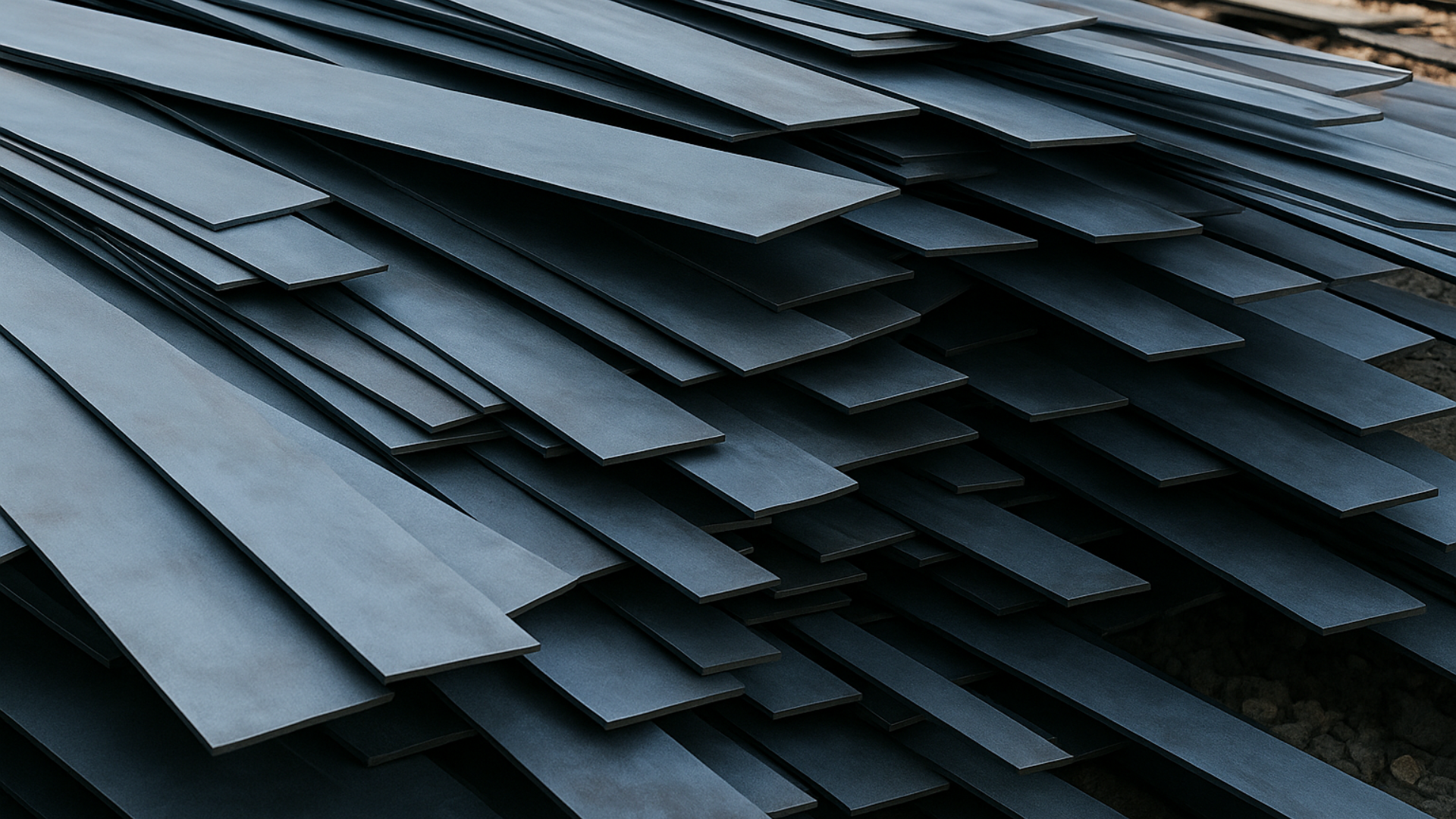
MS flat bars are rectangular mild steel sections with a flat, uniform surface that makes them easy to weld, cut, drill, and bend. Their geometry allows strong structural support and precise alignment in both construction and fabrication applications.
The global flat bar market is valued at USD 439,541.2 million in 2024 and is projected to grow at a 6.50%CAGR through 2031, showing its increasing adoption across infrastructure and industrial sectors.
Because they deliver strength, flexibility, and cost-efficiency together, MS flat bars remain one of the most widely used steel products in practical project execution.
Why MS Flat Bars Are Widely Used (Main Advantages)
-
High Fabrication Flexibility: Easily cut, drilled, welded, or bent during installation or modification without complex tools.
-
Strong and Reliable Load Support: Suitable for structural bracing, reinforcement, and equipment mounting in buildings and industrial setups.
-
Multiple Size Options for Design Fit: Available in different widths and thicknesses, enabling precise selection based on load and span.
-
Cost-Effective Structural Solution: Helps reduce project steel cost where heavy structural members (like channels or beams) are not required.
-
Clean Surface for Finishing Works: Flat profile supports grinding, painting, and architectural finishing with minimal preparation.
-
Reduced Wastage on Site: Straight geometry and uniform dimensions help maintain better cutting efficiency and material utilization.
Because of these advantages, MS flat bars remain one of the most dependable and versatile steel products for both construction and manufacturing teams.

Key Applications in Building Construction
MS flat bars are widely used on construction sites because they provide strong support, clean alignment, and easy fabrication for both structural and architectural elements.
|
Construction Application |
Why MS Flat Bars Are Used |
|
Gates, grills, fences, railings |
Flat surface simplifies welding and finishing for architectural elements |
|
Door and window frames |
Offers rigid alignment and seamless integration with other steel members |
|
Structural bracings and stiffeners |
Enhances stability in beams, columns, and support areas |
|
Base plates and support frames |
Provides strong horizontal seating for structural members and machinery |
|
Staircase and handrail components |
Easy shaping and high dimensional consistency for curved/angled assemblies |
|
Scaffolding accessories and temporary structures |
Simple to modify onsite and suitable for repeated use |
These versatile applications show why MS flat bars remain a standard choice for everyday construction needs.
Also read: Mild Steel Applications in Fabrication: Uses, Advantages & Processes
Industrial & Fabrication Uses Outside Construction
Beyond building works, MS flat bars play a crucial role in mechanical, industrial, and fabrication setups. Their ability to withstand operational stress while being easy to machine makes them suitable for equipment manufacturing, alignment assemblies, and custom steel structures in workshops and industrial environments.
Here are the most common industrial uses explained briefly:
-
Machine Frames & Equipment Bases: MS flat bars offer rigid support for machinery and create stable mounting surfaces that handle vibration and operational loads in factories and workshops.
-
Cable Trays & Support Brackets: Flat bars help maintain proper alignment of cables and ducts, reducing installation time and ensuring safe electrical routing.
-
Industrial Racks, Storage Shelving & Material Handling Systems: Their strength-to-thickness advantage allows fabricators to build durable storage systems that carry heavy loads continuously.
-
Automotive Brackets, Chassis Supports & Trailer Frames: In transport and automobile fabrication, MS flats provide lightweight structural reinforcement and can be easily repaired during wear.
-
Walkways, Platforms & Guard Rails: The flat geometry supports anti-skid or topped surfaces and strong lateral resistance, helping maintain worker safety in industrial plants.
-
Fabricated Components for Machinery Upgrades & Retrofits: Since they are simple to cut and weld, engineers rely on MS flats for fast field modifications, retrofitting frames, and repair jobs.
In manufacturing and fabrication, the ability to quickly mold MS flat bars into custom shapes makes them essential for precision-built industrial systems.
Suggested read: MS Steel vs SS Steel: Key Differences That Matter in 2025
How to Choose the Right MS Flat Bar Size for Your Project
Selecting the right MS flat bar isn’t about choosing any width or thickness available in stock. Each application requires a bar that can support the expected load, bending stress, and connection detail without deforming during use. A quick engineering-led evaluation ensures accurate sizing and prevents on-site rework.
Key selection considerations include:
-
Load and Span Requirements: Heavier loads or longer spans require wider and thicker flats to prevent sagging or bending over time.
-
Weldability and Joint Design: Check the bar’s thickness against welding access on site; thicker bars need more precise welding control to maintain structural continuity.
-
Surface Exposure and Corrosion Protection: For outdoor or humid environments, flats should include protective coatings (paint, galvanizing) to ensure long-term durability.
-
Alignment and Tolerance Needs: Applications like frames and brackets require precise dimensional accuracy to ensure tight fits during fabrication.
-
Fabrication and Modification Scope: Choose a size that can be easily drilled, bent, or shaped without compromising strength, especially in retrofit projects.
-
Compliance with Project Specifications: Final selection should match the structural drawings or fabrication standards issued by the design team.
Optimizing size and grade during procurement helps reduce fabrication waste, improve performance, and support predictable project execution.
Why Buying Through a Verified Steel Marketplace Matters
MS flat bars may look like a simple product, but dimensional accuracy, surface quality, and grade compliance directly affect how well they perform once fabricated or installed. When sourcing through unverified dealers, inconsistencies in thickness or hardness can lead to welding failures, alignment issues, and costly fabrication delays.
A verified digital steel marketplace like SteelonCall solves these sourcing challenges with:
-
Quality-Assured Products: All MS flat bars listed are checked for compliance with standard specifications, reducing the risk of receiving undersized or substandard material.
-
Transparent, Location-Based Pricing: Contractors can compare live rates across multiple suppliers and delivery locations, preventing last-minute budget surprises.
-
Bulk and Custom Size Availability: Flat bars in various widths and thicknesses can be ordered in required quantities, even for large or phased project schedules.
-
Reliable Logistics and Delivery Coordination: Materials are delivered directly to fabrication units or construction sites, helping teams maintain continuity in execution.
-
Single-Platform Vendor Management: Teams avoid dealing with multiple local dealers, and order tracking becomes effortless through a centralized dashboard.
This level of supply reliability and traceability supports faster fabrication, minimizes wastage, and ensures every bar installed performs as expected.
How SteelonCall Supports Contractors and Fabricators
Whether you’re securing MS flat bars for a structural application or a continuous fabrication workflow,SteelonCall ensures you get the right material, at the right time, without supply interruptions.
Here’s how we simplify your procurement:
-
Direct Sourcing From Trusted Mills and Stockyards: Eliminates middleman cost variations and ensures you receive genuine material every time.
-
Dedicated Support for Project-Based Orders: Our team assists with quantity planning, shipment scheduling, and dispatch coordination based on your fabrication timeline.
-
Flexible Delivery Across South India: Seamless fulfillment to construction hubs like Hyderabad, Bengaluru, Vijayawada, and Visakhapatnam keeps your project running smoothly.
-
Competitive Pricing for Bulk Orders: Procurement teams can take advantage of transparent and optimized pricing aligned to project budgets.
With SteelonCall, you can focus on fabrication and construction, while we handle the sourcing complexity.
Conclusion
MS flat bars are one of the most adaptable steel products used across construction and industrial fabrication. Their flat surface, wide size availability, and reliable load-handling capacity make them suitable for frames, bracings, machinery bases, and architectural metalwork. Choosing the correct width and thickness ensures performance, safety, and minimal on-site rework.
Sourcing through a verified marketplace like SteelonCallhelps ensure consistent quality, traceable delivery, and competitive pricing, all essential for time-bound fabrication and RCC execution. When every component contributes to structural stability and industrial precision, MS flats provide the value, strength, and flexibility professionals rely on.
Order Your MS Flat Bars With Ease on SteelonCall. Check Live Prices.
FAQs
1. What sizes do MS flat bars come in?
Widths typically range from 12 mm to 150+ mm and thickness from 3 mm to 25+ mm, depending on supplier availability and application needs.
2. Can MS flat bars be used for load-bearing structures?
Yes, provided the bar thickness and width are selected based on structural load requirements and design specifications.
3. Do MS flat bars require surface protection?
If used outdoors or in humid environments, applying galvanizing or high-grade coatings helps prevent corrosion and extend lifespan.
4. Are MS flat bars suitable for welding and bending?
Absolutely. Their mild-steel composition ensures high weldability and good formability, allowing smooth fabrication on site.
5. How can I ensure I receive the correct flat bar dimensions?
Always buy from verified, quality-checked suppliers like those on SteelonCall and confirm compliance with the dimensions mentioned in project drawings before ordering.
Need a price for your requirement?
Share your grade, diameter and quantity — our steel experts come back with a live quote and delivery timeline.