
SteelonCall Journal
Understanding Industrial Roofing GI Sheet Structures
Industrial roofing GI sheet structure explained for real projects. Avoid leaks, save rework costs, and choose the right sheet and supplier from day one.
Steeloncall
20 December 2025 · 12 min read
On this page
- In a Nutshell
- Where Industrial GI Sheet Roofing Works Best
- Key Components Of an Industrial Roofing GI Sheet Structure
- Types Of GI Roofing Sheets Used in Industrial Structures
- Design and Structural Considerations for GI Sheet Industrial Roofs
- Common Mistakes and Quality Risks in GI Industrial Roofing
- Why Choose SteelonCall as Your Digital Steel Marketplace for GI Roofing Sheets
- Conclusion
- FAQs
When a McKinsey study says 98% of large construction projects suffer significant cost overruns and delays, you probably aren’t surprised anymore. Closer home, Indian engineers estimate that 15–20%of project cost quietly disappears into rework, fixing leaks, damp patches, and envelope failures that should have been done right the first time.
On an industrial site, you feel that in very real ways: a GI roof that drums in the heat, sweats in the monsoon, starts leaking over machinery, or needs patchwork every year. It’s not a “minor snag”; it’s lost production, safety complaints, and a line item in your rework budget.
This article breaks down industrial roofing GI sheet structures from a practitioner’s angle. Learn how the structure, sheet choice, fixing details, and supplier decisions together decide whether your roof quietly performs for years, or becomes the next rework story.
In a Nutshell
-
Hidden cost risks in roofing: Over 15–20% of industrial project costs in India are lost to rework from leaks, damp patches, and envelope failures; issues that start when roofing decisions are rushed.
-
Right applications, real savings: GI roofing delivers its true value in warehouses, factories, fabrication yards, cold storage, and semi-urban sheds where weather, heat, and operational loads are extreme.
-
Sheet selection changes performance: Corrugated for basic durability, trapezoidal for strong spans and wind, PPGI for corrosion-heavy environments. Insulated panels are used for temperature-critical units; matching the sheet type to the environment prevents early failures.
-
Design is the real strength: Correct slope, wind-uplift design, structural load checks, fixing details, and drainage planning decide whether your GI roof still feels solid in year five, not just on handover day.
-
Sourcing controls quality before installation: Verified brands, documented thickness, real-time pricing, and reliable logistics matter from day one. SteelonCall is a digital steel marketplace that helps ensure those essentials never slip.
Where Industrial GI Sheet Roofing Works Best
You pick GI-sheet roofing for industrial sheds not because it looks good, but because your roof must survive heavy rains, blazing sun, and long factory hours without fail.
If your roof fails, you lose inventory, halt operations, and pay for re-work. That’s why you need to know exactly where GI-sheet roofing delivers and why these specific industrial settings rely on it.
Here’s when industrial GI-sheet roofing actually works and why you must check if your next roof falls in that category:
-
Warehouses and Logistics Parks
GI roofs resist corrosion and heavy weather. They are ideal for large spans, high racks, and frequent loading/unloading. -
Factories and Production Units
Roofs face heat, dust, moisture, and chemical exposure. A GI roof handles all this with minimal maintenance. -
Fabrication Yards and Workshops
Steel cutting, welding, and general fabrication often create dust, sparks, and moisture. GI roofs offer durability and protect your operations better than untreated materials. -
Cold Storage / Temperature-Sensitive Facilities
With correct cladding and insulation, GI sheet roofs help maintain controlled internal conditions while protecting from external weather. -
Agricultural or Semi-Urban Industrial Sheds
For units in rural or semi-urban areas, where maintenance resources may be limited, GI roofing is cost-effective, low-maintenance, and long-lasting.
Also Read: Different Types Of Roofs In Building Construction
Now, what decides whether your GI roof feels solid years later isn’t visible from the top. It’s built into the structure underneath, the real source of its strength.
Key Components Of an Industrial Roofing GI Sheet Structure
Most industrial roofs that fail on site do not collapse at the sheet. They give up at the connections, the spacing, or the missing bracing that no one checked in detail. If you only compare GI sheet brands and ignore the structure below, you leave money and safety on the table. This section helps you avoid that.
Below is a quick view of the main components that decide how reliable your industrial GI roofing structure will feel after year five, not just on handover day.
| Component | What It Actually Decides | What You Should Confirm |
|---|---|---|
|
Primary Frame (columns, rafters, trusses) |
The strength of every bay and how equipment loads transfer to the foundation |
Proper section sizing for span + wind zone |
|
Purlins & Eave Struts |
Whether sheets sag or stay firm under heat, wind and foot traffic |
Spacing that matches sheet profile and thickness |
|
Bracing System |
How stable your shed feels during storms or seismic movement |
Both roof and wall bracing included as per design |
|
GI Roofing Sheets |
Corrosion protection and weather resistance year after year |
Verified brand, correct coating and overlap spec |
|
Fasteners & Fixings |
Resistance to uplift, moisture entry and sheet movement |
Anti-corrosion screws/clips with proper pitch |
|
Flashings, Gutters, Downpipes |
Leak-proof edges and clean water exit from high-rainfall zones |
Slopes and outlet sizing suited to local rainfall |
|
Daylighting & Ventilation Units |
Worker comfort, heat removal, and lower energy usage |
Integration with purlins and sealed, reinforced joints |
Must Read: Choosing Between Galvalume and Galvanized Steel for Your Next Project

Once the structure is locked in, the real choice begins: the type of GI sheet you select decides how the roof performs in your specific environment.
Types Of GI Roofing Sheets Used in Industrial Structures
On paper, two suppliers may both quote “GI roofing sheet.” On-site, the difference shows up in how the profile drains water, how the coating handles fumes, and how the roof behaves under heat and wind.
Think of this section as your quick filter. Once you understand which sheet type fits which kind of use, it becomes much harder for anyone to push a generic, one-size-fits-all option at you.
Once you match the sheet to the environment it will face, your roof becomes predictable. That’s where the right type matters.
1. Corrugated GI Roofing Sheets
A familiar wavy profile that holds up well in day-to-day industrial use. Best when the priority is simple strength and easy water runoff rather than long spans or architectural impact.
• Good for small–mid industrial sheds where access and maintenance are frequent
• Handles monsoon water without complex detailing
• Trusted material that avoids surprises during installation
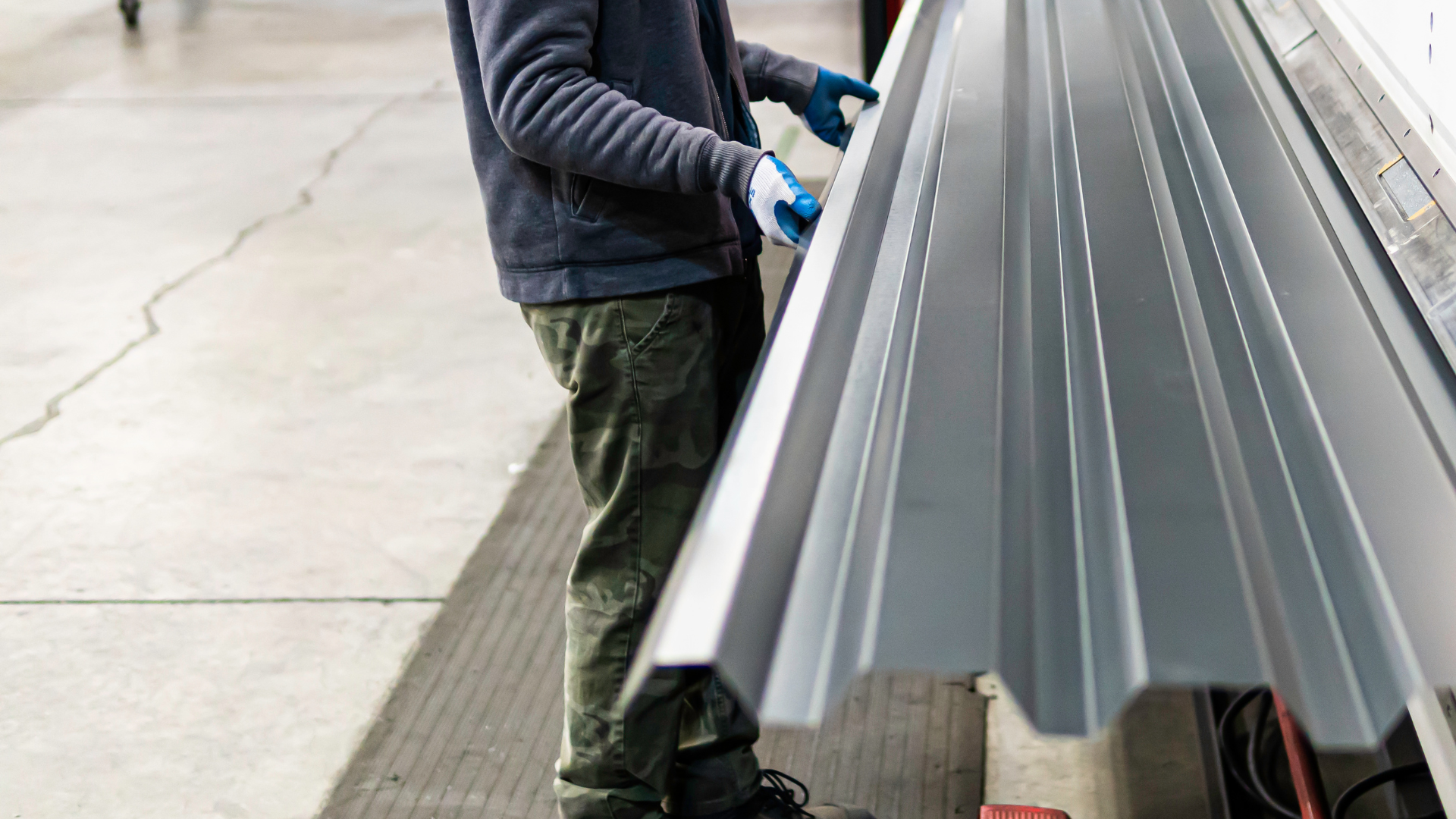
2. Trapezoidal / Profiled GI Sheets
Designed with deeper ribs to keep the roof steady under load and reduce deflection over long stretches. A practical step up when bay lengths grow, and wind exposure gets real.
• Ideal for warehouses and production floors with bigger spans
• Stronger resistance to foot traffic during maintenance
• More efficient drainage in heavy-rainfall regions
3. Color-Coated (PPGI) GI Sheets
A GI base with a protective topcoat that helps the roof stay cleaner, cooler, and less prone to corrosion or staining in harsh environments.
• Great for customer-facing facilities that need a tidier roofline
• Reduces surface heating and wear from sun exposure
• Supports operations involving fumes, chemicals, or high humidity
4. Insulated GI Roofing Panels (Sandwich / Composite)
A layered system that keeps interior conditions stable, even when outside temperatures fluctuate. Common in units where process quality depends on strict climate control.
• Helps reduce energy spent in cold storage and packing lines
• Cuts heat build-up inside metal-roof factories
• Improves worker comfort in long-shift industrial sites
Choosing the wrong sheet type is one of the biggest reasons roofs need early repairs. Confirming the exact profile, coating, and thickness upfront through SteelonCall removes that guesswork and protects you from costly replacements later.
A good sheet still needs the right skeleton beneath it. Now it’s about how the roof is actually shaped to handle your site’s realities.
Design and Structural Considerations for GI Sheet Industrial Roofs
For an industrial shed or warehouse, details like slope, load capacity, and wind resistance aren’t optional extras; they determine whether your GI roof lasts or turns into a maintenance headache.
When these structural factors are handled right, your roof stays watertight, stable under wind, and safe during heavy rains or seasonal storms.
Here are the crucial design points you must get right before you approve any roofing plan.
| Consideration | What It Ensures | Quick Check |
|---|---|---|
|
Roof Pitch / Slope |
Effective drainage, no water pooling |
≥ 5° slope (adjusted for rainfall) |
|
Wind Load & Uplift Resistance |
Sheets stay intact even in storms |
Design matches local wind zone; secure anchoring |
|
Structural Load Capacity |
Roof bears its own weight and maintenance loads |
Frame and purlin specs confirm load rating |
|
Sheet Fixing & Overlaps |
No leaks, uplift, or loose sheets |
Correct overlap direction, corrosion-resistant fasteners |
|
Rainwater Management |
Gutters and downpipes drain water safely |
Adequate gutter size and proper outflow path |
|
Ventilation & Thermal Expansion |
Reduces heat build-up, avoids stress/cracks |
Vents or expansion provisions and sealed joints |
Also Read: Understanding Mild Steel Grades in Indian Standards
Knowing the right design is half the job. Avoiding the mistakes that quietly ruin roofs is what actually protects your project.
Common Mistakes and Quality Risks in GI Industrial Roofing
You can lock in a good design and still end up with a weak roof if small compromises slip through during procurement and installation. This is usually where problems start: a slightly thinner sheet than quoted, an unbranded coil swapped in at the last moment, or fasteners that rust in one season. These are avoidable, but only if you know what to look for.
Below are the issues that quietly turn an industrial GI roof into a future repair job, and the checks that help you stay ahead of them:
-
Underspecified Or Swapped Sheet Thickness
Quotation mentions 0.5 mm, but delivery looks closer to 0.4 mm. Even a small drop in thickness reduces stiffness and life, especially on large spans. Use gauges and mill test certificates to verify actual thickness and coating on arrival. -
Local Or Unbranded Sheets Delivered Instead Of Tier-1 Brands
It is common for cheaper local coils to be supplied when branded GI was promised. This increases the risk of early corrosion and coating failure. Insist on visible brand markings on sheets and match them with the PO before unloading. -
Improper Fasteners And Accessories
Using low-grade screws, washers, and sealants can lead to rust streaks, leaks around holes, and sheets lifting in high wind. Check that fasteners are compatible with GI, are corrosion-protected, and follow the spacing pattern given in the design. -
Incorrect Overlaps And Sheet Orientation
Wrong side laps, short end laps, or fixing against the fall of water often create capillary leaks that appear only after a few heavy rains. Ask your contractor to follow the manufacturer’s recommended lap length and orientation, and inspect a few critical bays yourself. -
Poor Handling And On-Site Storage
Sheets dragged on rough surfaces, stored directly on soil, or stacked without spacers can damage the zinc coating and edges before installation. Make sure bundles are kept on level supports, covered from direct rain, and lifted, not dragged. -
Inconsistent Quality Across Batches
For large projects supplied in phases, sometimes each lot comes from a different source or coil quality. This leads to patchy weathering and performance. Try to lock the brand and specifications for the full requirement, and record batch details for each delivery. -
No Independent Checks On Delivered Material
Many roofs fail because nobody measured or tested anything at the gate. Simple checks like thickness, coating confirmation, and visual surface inspection can prevent most material-quality surprises. Building this into your site checklist is one of the cheapest risk controls you can add.
Once you know what can go wrong, the smartest move is choosing a sourcing partner who removes those risks before they reach your site.
Why Choose SteelonCall as Your Digital Steel Marketplace for GI Roofing Sheets
Ordering steel affects safety and deadlines, not just budgets. One wrong batch can lead to leaks, downtime, and rework. With SteelonCall, you lock in the right brand, thickness, coating, and price upfront; documented before delivery, so there are no surprises on the roof.
Here's what SteelonCall really gives you and why it matters:
-
250+ Verified suppliers & top-brand inventory
SteelonCall has strong coverage across Andhra Pradesh, Telangana, and Karnataka, backed by 250+ verified suppliers and trusted steel brands. -
Instant, real online steel pricing:
SteelonCall is the only digital steel marketplace that shows actual steel prices online. Enter your requirement and get the price instantly. You see current rates for the exact grade and quantityyou need before you commit, which keeps project budgets predictable. -
Huge range of steel products in one place
From GI sheets to structural steel, fabrication materials to special steel, you get access to over 1000 catalogues, which saves you time chasing multiple suppliers. -
Bulk-order capability with flexible quantities
Whether you need a few sheets or enough for a full plant roof, SteelonCall handles both without arbitrary minimum order constraints. -
Secure, streamlined online ordering & logistics
No more visiting multiple dealerships or managing tedious paperwork. Order online, track deliveries, and get materials shipped directly. This is ideal when time = money on-site. -
Quality checks and documentation included
Every order comes with certificates, verified specifications, and transparent documentation. You get more control over what shows up on the site. -
Responsive support at every step: Need coating certificates, delivery status, or quick clarifications? SteelonCall’s team is reachable on WhatsApp, phone, and email to keep your order moving smoothly.
Suggested Read: 1 Ton Steel Price Today in India: Updated Rates and Buyer Guide
Conclusion
A roof doesn’t demand attention when it is designed and sourced right; it simply does its job, day after day, while your operations move forward without disruption. The smartest industrial buyers treat roofing as a long-term asset, not a hurried purchase. That one mindset shift alone protects everything beneath it.
And when you want that peace of mind in action, SteelonCall steps in with transparency, verified quality, and delivery you can count on. You get reliable delivery, documented quality, and no surprises at installation. The usual roofing mistakes are stopped before they reach your site.
FAQs
1. What thickness of GI roofing sheet is best for industrial sheds?
For most industrial roofs, a 0.45–0.60 mm thickness is commonly used, depending on span, wind zone, and loading needs.
2. Do GI sheets rust quickly in humid or coastal areas?
They resist corrosion due to zinc coating, but salt-air or chemical exposure can accelerate wear. Branded sheets with the right coating help extend lifespan.
3. How long does a GI industrial roof usually last?
With correct design, installatio,n and genuine material, a GI sheet roof can perform well for 15–25 years before major maintenance.
4. Can we install solar panels or utilities on a GI sheet roof?
Yes, provided the structure and purlins are designed for extra loads. Always confirm load ratings before adding equipment.
5. What should I inspect when the GI sheets arrive at site?
Check sheet thickness, zinc coating, brand markings, fasteners, and visible surface condition before installation.
Need a price for your requirement?
Share your grade, diameter and quantity — our steel experts come back with a live quote and delivery timeline.