
SteelonCall Journal
Material Required for 1000 Sq Ft Slab (Cement, Sand, Steel)
Material required for 1000 sq ft slab most contractors miscalculate. See cement, sand, aggregate, and steel quantities before you cast the slab.
Steeloncall
20 January 2026 · 15 min read
On this page
- At a Glance
- Key Assumptions for 1000 Sq Ft Slab Calculation
- Step-by-Step Material Calculation Flow for a 1000 Sq Ft Slab
- Slab Volume Calculation for 1000 Sq Ft
- Concrete Quantity Required for 1000 Sq Ft Slab
- Cement Required for 1000 Sq Ft Slab
- Sand Required for 1000 Sq Ft Slab
- Aggregate Required for 1000 Sq Ft Slab
- Steel Required for 1000 Sq Ft RCC Slab
- Summary Table: Material Required for 1000 Sq Ft Slab
- Factors That Can Change Material Quantity for a 1000 Sq Ft Slab
- Common Mistakes in 1000 Sq Ft Slab Material Estimation
- How SteelonCall Helps You Source Slab Materials with Confidence
- Conclusion
- FAQs
Estimating the material required for a 1000 sq ft slab is one of the most critical steps in planning an RCC roof slab. A small error in calculation can lead to steel shortages on casting day, excess cement lying unused on site, or last-minute purchases at higher prices. All of these directly affect project cost and timelines.
For contractors and builders, especially in Andhra Pradesh, Telangana, and Karnataka, slab work is usually executed under tight schedules where accurate quantity estimation is essential for smooth procurement and on-time concreting. This becomes even more important today, as steel prices fluctuate frequently and material substitution risks are common in the open market.
In this article, we explain how to calculate the material required for a 1000 sq ft RCC slab in a clear, step-by-step manner. The focus is on cement, sand, aggregate, and steel quantities, using standard site assumptions commonly followed in residential and commercial construction. These calculations will help you plan purchases confidently, control wastage, and avoid last-minute surprises during slab execution.
Note: The quantities discussed here are indicative. Final material requirements should always be confirmed based on structural drawings and design specifications approved by your engineer.
At a Glance
-
A 1000 sq ft RCC slab (125 mm thick) requires roughly 12.2–12.8 m³ of concrete, including practical site wastage.
-
Cement requirement for this slab is typically 98–103 bags (50 kg each) when using M20 nominal mix.
-
Sand and aggregate quantities are approximately 5.1–5.6 m³ of sand and 10.1–11.2 m³ of aggregate.
-
Steel requirement for a conventional residential slab is usually 0.9–1.05 tonnes, depending on design and detailing.
-
Final material quantities can change based on slab thickness, span, load conditions, and concrete grade.
-
Accurate quantity estimation helps prevent steel shortages, excess material, last-minute purchases, and cost overruns during slab execution.
Key Assumptions for 1000 Sq Ft Slab Calculation
Before calculating the material required for a 1000 sq ft slab, it is important to clearly define the base assumptions. These assumptions reflect standard RCC slab practices commonly followed in residential and low-rise commercial buildings across South India. Fixing them upfront ensures the calculations remain consistent and avoids confusion later.
The following assumptions are used throughout this calculation.
|
Parameter |
Assumption Used |
|
Slab area |
1000 sq ft |
|
Slab type |
RCC roof slab |
|
Slab thickness |
125 mm (5 inches) |
|
Concrete grade |
M20 |
|
Concrete mix |
Nominal mix |
|
Steel percentage |
Approximately 1 percent of concrete volume |
|
Wastage allowance |
5 to 10 percent |
Source: The slab type, minimum concrete grade (M20), nominal mix usage, and reinforcement design dependency are based on Indian Standard practice as defined in IS 456:2000 (Plain and Reinforced Concrete) and mix proportioning guidance in IS 10262:2019 issued by the Bureau of Indian Standards.
These values are not universal and may vary based on structural design, load requirements, span length, seismic zone, and architectural layout. For example, slabs designed for higher loads or longer spans may require greater thickness or higher steel content.
With these assumptions fixed, the calculation can now be broken down into a clear, logical sequence that mirrors how slab work is planned on site.
Must Read: 10mm Steel Bar Price Today in India
Step-by-Step Material Calculation Flow for a 1000 Sq Ft Slab
To avoid errors and keep procurement simple, slab material estimation should always follow a fixed sequence. Each step depends on the previous one, so once the slab volume and concrete quantity are set, the remaining quantities fall into place.
Here is the calculation flow we will follow for a 1000 sq ft RCC slab.
1. Calculate slab volume using slab area and thickness
2. Confirm concrete quantity and add a small wastage allowance
3. Calculate cement requirement based on the concrete mix assumption
4. Calculate sand requirement
5. Calculate aggregate requirement
6. Estimate steel requirement separately using standard slab reinforcement percentage
This approach helps you plan ordering in the same way most sites execute procurement. Concrete materials are planned first, and reinforcement steel is planned in parallel, since steel ordering usually needs brand confirmation, cutting schedules, and delivery coordination.
Every slab material estimate starts with one base value. Once this is calculated correctly, all other quantities fall into place.
Slab Volume Calculation for 1000 Sq Ft
Slab volume is the base for the entire estimation because concrete quantity is measured in volume. Once you know the slab volume, you can plan concrete and then break it down into cement, sand, and aggregate.
Given
-
Slab area = 1000 sq ft
-
Slab thickness = 125 mm (which is 0.125 m)
Step 1: Convert area into square meters
1 sq ft = 0.092903 sq m
So, 1000 sq ft = 1000 × 0.092903 = 92.903 sq m
Step 2: Calculate slab volume in cubic meters
Volume = Area × Thickness
Volume = 92.903 × 0.125 = 11.6129 cubic meters
So, the slab volume for 1000 sq ft with 125 mm thickness is about 11.61 m³.
This slab volume now becomes the reference point for planning the actual concrete quantity needed for casting.
Source: Volume calculation follows standard RCC measurement principles outlined in IS 456:2000 (Plain and Reinforced Concrete).
Concrete Quantity Required for 1000 Sq Ft Slab
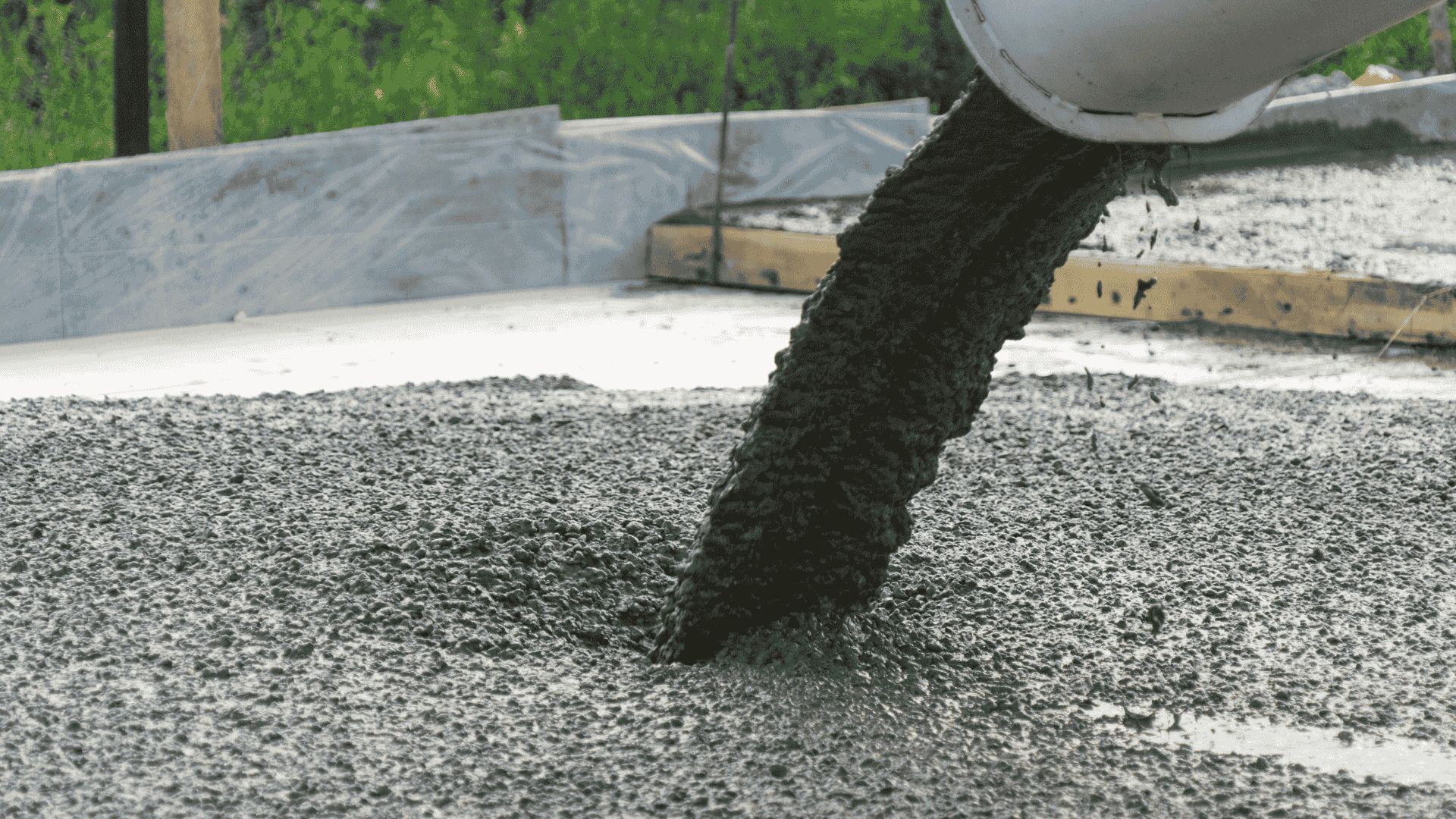
Now that the slab volume is known, the next step is to confirm the concrete quantity to be planned for casting. On most sites, it is standard practice to add a small allowance for spillage, uneven shuttering levels, and minor handling losses.
Base slab volume (from previous section)
Concrete volume = 11.61 m³
Add wastage allowance
A practical wastage allowance is 5% to 10%, depending on site control and workmanship.
-
At 5% wastage: 11.61 × 1.05 = 12.19 m³
-
At 10% wastage: 11.61 × 1.10 = 12.77 m³
So, for a 1000 sq ft slab, you should plan concrete quantity in this range:
-
Approximately 12.2 m³ to 12.8 m³
Based on this concrete requirement, individual material quantities can now be worked out in a practical order, starting with cement.
Source: Practical wastage allowance (5–10%) is considered in line with execution tolerances referenced in CPWD Specifications for Concrete Works and the CPWD Works Manual.

Cement Required for 1000 Sq Ft Slab
With the concrete quantity fixed, the next step is to estimate the amount of cement required. For slab work, many sites use M20 concrete with a nominal mix of 1:1.5:3 when concrete is site-mixed. If you are using RMC, cement quantity is not purchased separately, but this estimate is still useful for cost planning.
For nominal mix concrete, a commonly used planning rule is:
-
Cement required for M20 nominal mix is about 8 bags per 1 m³ of concrete (50 kg bags)
Using the concrete requirement range calculated earlier:
-
For 12.19 m³ concrete: 12.19 × 8 = 97.52 bags
-
For 12.77 m³ concrete: 12.77 × 8 = 102.16 bags
So, cement required for a 1000 sq ft slab is typically:
-
About 98 to 103 bags of cement (50 kg each)
Once cement quantity is clear, the focus shifts to fine aggregate, which directly affects workability and finish quality.
Source: Cement consumption is derived from nominal mix–based rate analysis commonly referenced in the CPWD Delhi Schedule of Rates (DSR) for M20 concrete. Actual cement content may vary for design mix or ready-mix concrete.
Sand Required for 1000 Sq Ft Slab
After cement, the next major component is fine aggregate, which is sand. In South India, most slab work today is done using M-sand due to availability and consistent grading, but the quantity calculation remains the same for planning purposes.
For M20 nominal mix (1:1.5:3), a practical planning rule used on many sites is:
-
Sand required per 1 m³ of concrete is about 0.42 to 0.44 m³
Using the concrete requirement range already calculated:
-
For 12.19 m³ concrete: 12.19 × 0.42 = 5.12 m³
-
For 12.77 m³ concrete: 12.77 × 0.44 = 5.62 m³
So, sand required for a 1000 sq ft slab is typically:
-
About 5.1 to 5.6 m³ of sand
Along with sand, coarse aggregate makes up the bulk of concrete volume and needs to be planned carefully for transport and storage.
Aggregate Required for 1000 Sq Ft Slab
Coarse aggregate, commonly called jelly in South India, is the largest portion of concrete by volume. For RCC slabs, 20 mm down aggregate is typically used to achieve good workability and compaction.
For M20 nominal mix (1:1.5:3), a practical planning rule used on many sites is:
-
Aggregate required per 1 m³ of concrete is about 0.83 to 0.88 m³
Using the concrete requirement range already calculated:
-
For 12.19 m³ concrete: 12.19 × 0.83 = 10.12 m³
-
For 12.77 m³ concrete: 12.77 × 0.88 = 11.24 m³
So, aggregate required for a 1000 sq ft slab is typically:
-
About 10.1 to 11.2 m³ of aggregate
While concrete materials are planned together, reinforcement steel is estimated separately due to its dependence on design and detailing.
Source: Coarse aggregate quantities are based on standard nominal mix proportioning practices referenced in CPWD Specifications for concrete works.
Steel Required for 1000 Sq Ft RCC Slab
Steel is usually estimated separately because the final quantity depends on the structural design, bar spacing, slab spans, and load conditions. For a quick procurement estimate, many contractors use a standard slab reinforcement range.
Planning assumption used here
-
Steel percentage = about 1% of concrete volume (a common thumb rule for conventional residential slabs)
Step 1: Convert steel percentage into weight per cubic meter
-
1% steel by volume means steel volume per 1 m³ concrete = 0.01 m³
-
Steel density is approximately 7850 kg per m³
So steel weight per 1 m³ concrete = 0.01 × 7850 = 78.5 kg
Source: Steel density value is referenced from NPTEL (IIT) civil engineering material property data.
Step 2: Apply it to the slab volume
From an earlier calculation, slab volume (without wastage) is 11.61 m³.
Steel required = 11.61 × 78.5 = 911 kg (approximately)
Practical procurement range
To account for detailing variations and cutting wastage, a safe planning range for a 1000 sq ft slab is:
-
About 0.9 to 1.05 tonnes of steel (900 to 1050 kg)
Typical bar sizes used in slabs
-
Main and distribution bars are commonly 8 mm, 10 mm, and 12 mm, depending on design and spacing.
Bringing these quantities together makes it easier to review the complete material picture at a glance.
Note: This steel percentage is used only as a preliminary planning guideline and reflects typical reinforcement ranges observed in CPWD rate analysis. Final steel quantity must be confirmed from structural drawings and bar bending schedules as per IS 456:2000.
Summary Table: Material Required for 1000 Sq Ft Slab
The table below combines the quantities calculated in the previous sections for a 1000 sq ft RCC slab with 125 mm thickness, assuming M20 nominal mix and a practical wastage allowance for concrete materials.
|
Material |
Estimated Quantity |
Unit |
|
Concrete |
12.2 to 12.8 |
m³ |
|
Cement |
98 to 103 |
bags (50 kg) |
|
Sand (fine aggregate) |
5.1 to 5.6 |
m³ |
|
Aggregate (coarse aggregate) |
10.1 to 11.2 |
m³ |
|
Steel (reinforcement) |
0.9 to 1.05 |
tonnes |
Even with the same slab area, actual material consumption can vary based on design and site conditions.
Source Note: The quantities above represent planning-level estimates derived from BIS standards and CPWD construction practices. Final material quantities must be approved by the project structural engineer.
Also Read: Steel Industry Analysis India: What Builders Must Know
Factors That Can Change Material Quantity for a 1000 Sq Ft Slab
Even if your slab area is exactly 1000 sq ft, the final material requirement can vary noticeably from project to project. This is why quantity planning should always be treated as a procurement estimate, and the final order should be aligned with the structural drawing and bar bending schedule.
Here are the most common factors that change slab material consumption on site.
1. Slab thickness: A 4 inch slab and a 6 inch slab have very different concrete volumes. Even a small increase in thickness increases cement, sand, and aggregate quantities directly.
2. Structural design and span length: Longer spans, fewer beams, or larger cantilevers typically increase reinforcement and may require higher slab thickness or stronger concrete grade.
3. Concrete grade selection: M25 or higher grade concrete changes cement content and may affect mix design, especially if you are using RMC or design mix concrete.
4. Type of slab: Flat slabs, two-way slabs, and slabs with heavy openings or drop panels have different reinforcement patterns and steel quantities compared to a conventional one-way slab.
5. Load conditions: Slabs designed for additional loads such as water tanks, heavy flooring, machinery, or parking areas usually need more steel and sometimes thicker slabs.
6. Site workmanship and wastage control: Poor shuttering, leakage in formwork, improper storage, and handling losses can increase wastage, especially for cement and aggregates.
Many slab-related cost overruns are caused not by wrong calculations, but by avoidable planning mistakes.
Common Mistakes in 1000 Sq Ft Slab Material Estimation
Even experienced contractors face cost overruns and site delays due to small but avoidable estimation mistakes. Being aware of these issues before ordering materials helps protect both budget and schedule.
1. Ignoring wastage during planning: Estimating exact theoretical quantities without adding a practical wastage allowance often leads to last-minute purchases, usually at higher prices.
2. Using a fixed steel quantity for all slabs: Steel requirement varies with span, load, and bar spacing. Applying the same steel quantity for every 1000 sq ft slab without checking drawings can result in shortages or excess stock.
3. Mixing concrete grade assumptions: Calculating quantities for M20 but executing the slab with M25 or design mix concrete leads to incorrect cement planning and cost mismatch.
4. Overlooking bar cutting and lap wastage: Reinforcement steel always involves cutting loss, laps, and bends. Ordering exact calculated weights without a buffer often causes delays during reinforcement fixing.
5. Procuring materials from multiple unverified sources: Buying cement, sand, and steel separately from unknown suppliers increases the risk of grade mismatch, substituted brands, and inconsistent quality.
6. Delaying steel procurement until the last moment: Steel availability, brand selection, and delivery scheduling should be planned early. Late ordering often forces compromise on brand or price.
Once quantities are estimated, attention naturally shifts to price visibility, material authenticity, and execution readiness, especially for reinforcement steel.
How SteelonCall Helps You Source Slab Materials with Confidence
Accurate calculation is only the first step in slab planning. The next challenge is making sense of market prices and brand options before finalising budgets, especially for reinforcement steel where rates change frequently and multiple brands are available.
SteelonCall supports contractors and builders by bringing price visibility and brand clarity into slab planning.
-
Live steel price visibility across brands: SteelonCall displays steel prices from multiple manufacturers in one place. This helps you understand current market levels and compare how different brands are priced for the same grade and quantity.
-
Clear grade-wise and brand-wise comparison: When planning slab steel, knowing the price difference between Fe 500D and Fe 550D or between different TMT brands helps you make informed decisions aligned with your structural requirements and budget.
-
Quantity-based price planning: By comparing prices to your estimated slab steel quantity, you can assess budget impact early and avoid surprises as slab execution dates approach.
-
Better planning before finalising suppliers: With clear visibility on prevailing prices and brand options, you can approach your regular suppliers with better clarity, stronger negotiation position, and fewer last-minute changes.
When quantity estimation is supported by reliable price and brand information, slab planning becomes more controlled, transparent, and predictable.
Conclusion
Once the material required for a 1000 sq ft slab is estimated, the real challenge lies in translating these quantities into a reliable and predictable slab budget. Even small changes in TMT prices can affect overall cost planning, especially when slab steel quantities run close to one tonne.
For many contractors, the challenge is not calculation, but lack of reliable price visibility while planning slab work. Market prices often change between estimation and execution, making it difficult to freeze budgets confidently.
SteelonCall helps bridge this gap by allowing you to check real-time steel prices online based on your required quantity and grade. This helps you align slab material estimates with current market rates, plan budgets more accurately, and avoid surprises when slab work is scheduled.
When quantity estimation and price visibility come together, slab planning becomes more controlled and predictable. Get in touch with our experts today!
FAQs
Q: How much steel is required for a 1000 sq ft slab?
A: For a conventional RCC slab, steel is typically 0.9 to 1.05 tonnes (900 to 1050 kg) based on slab thickness and reinforcement detailing. Final steel quantity should be confirmed from the structural drawing and bar bending schedule.
Q: How much concrete for a 1000 sq ft slab?
A: For a 125 mm (5 inch) slab, concrete requirement is about 11.61 m³. With practical wastage allowance, plan around 12.2 to 12.8 m³.
Q: How much does a slab cost for 1000 square feet?
A: Slab cost depends mainly on steel rate, concrete grade, slab thickness, labour, and shuttering, so it varies by location and design. The most accurate way is to multiply your estimated quantities (steel in tonnes, concrete in m³) by current local rates and add execution costs.
Q: How much stone is required for a 1000 sq ft roof?
A: For M20 nominal mix planning, coarse aggregate (stone/jelly) is typically about 10.1 to 11.2 m³ for a 1000 sq ft slab including wastage. Actual quantity can change with mix design and site workmanship.
Q: How much material is required for a 1000 sq feet area?
A: For a 1000 sq ft RCC slab (125 mm thick), a practical estimate is 98–103 cement bags, 5.1–5.6 m³ sand, 10.1–11.2 m³ aggregate, and 0.9–1.05 tonnes steel. Use structural drawings to finalise quantities for your specific slab design.
Q: How do you calculate steel for a slab?
A: A common thumb rule is about 1% steel by concrete volume, then converted to weight using steel density (approx. 7850 kg/m³). For final accuracy, use the reinforcement detailing and bar bending schedule from the structural engineer.
Need a price for your requirement?
Share your grade, diameter and quantity — our steel experts come back with a live quote and delivery timeline.