
SteelonCall Journal
Types of Structural Steel Every Indian Contractor Should Know
A practical guide to types of structural steel for Indian projects. Choose the right sections, reduce sourcing risks, and keep construction on track.
Steeloncall
20 December 2025 · 13 min read
On this page
Choosing the wrong structural steel type often results in avoidable redesigns, rising costs, and schedule pressure once construction work is already underway. With finished steel production reaching 107.19 million tonnes and growing by 4.4 per cent, options increase while clarity on correct usage often declines.
A clear understanding of the types of structural steel helps teams align design intent with execution realities before costly decisions are locked in. This guide explains where each steel section fits, what risks it reduces, and how informed choices support predictable progress from planning to completion.
Key Takeaways:
-
Choose steel based on its role to avoid safety issues and oversizing.
-
Use rolled sections for standard spans and fabricated ones for custom or larger spans.
-
Ensure steel availability to prevent delays from shortages or substitutions.
-
Align procurement with construction schedules for smooth site operations.
-
Don’t prioritise price alone; ensure the correct grades and sizes are selected.
Why Different Types of Structural Steel Exist
Every structure behaves differently once loads act on it. Steel sections are designed to respond to how loads move, how far they travel, and how the structure is assembled on site.
Choosing the right type early helps you avoid redesigns, excess weight, and handling issues during execution. Structural steel types mainly differ based on load behaviour and construction requirements.
Load-Bearing vs Supporting Steel Members
Load-bearing members take direct structural forces. Beams handle bending across spans. Columns resist compression and transfer loads vertically. Bracing members control lateral forces from wind or seismic action. Selection errors here affect safety checks and force drawing revisions.
Supporting members assist the main frame. Angles and channels help distribute loads, brace connections, and support secondary elements. These members simplify detailing and erection, but still need correct sizing to prevent misalignment and site fixes.
The table below summarises how these two member types differ in function and risk:
|
Aspect |
Load-Bearing Members |
Supporting Members |
|
Load behaviour |
Bending, compression, and lateral control |
Load transfer and stability |
|
Typical role |
Primary frame |
Bracing and connections |
|
Impact of wrong choice |
Redesign and approvals |
Erection delays |
Rolled Sections vs Fabricated Sections
Rolled sections suit projects with standard spans and repeat spacing. Shorter spans allow lighter profiles, while long, clear spans demand deeper or wider sections. Using standard rolled sizes helps control weight and speeds up erection.
Fabricated sections come into play when spans increase or loads exceed standard limits. Plates allow custom-built members and complex joints. Hollow sections offer higher strength-to-weight ratios, which reduces overall steel consumption in trusses and sheds.
Section size, length, and handling ease also matter, especially on tight urban sites where lifting and storage are restricted. The comparison below shows how rolled and fabricated sections affect execution planning:
|
Aspect |
Rolled Sections |
Fabricated Sections |
|
Span suitability |
Short to medium |
Long and heavy-load spans |
|
Connections |
Simpler |
Custom plate-based |
|
Weight control |
Moderate |
Better for weight optimisation |
|
Site handling |
Easier |
Needs careful planning |
Once these basic distinctions are clear, you can focus on the specific structural steel types commonly used across construction and fabrication work.
Also Read: Structural steel: The Backbone of Modern Construction
7 Main Types of Structural Steel Used in Construction
Structural steel selection determines how safely loads transfer, how smoothly erection proceeds, and how reliably procurement aligns with construction schedules across different project stages. Each steel type exists because structures demand different load responses, connection methods, and erection speeds.
Here are the main types of structural steel commonly specified for construction and fabrication work, explained from a practical site and buying perspective.
1. TMT Bars for RCC Structures
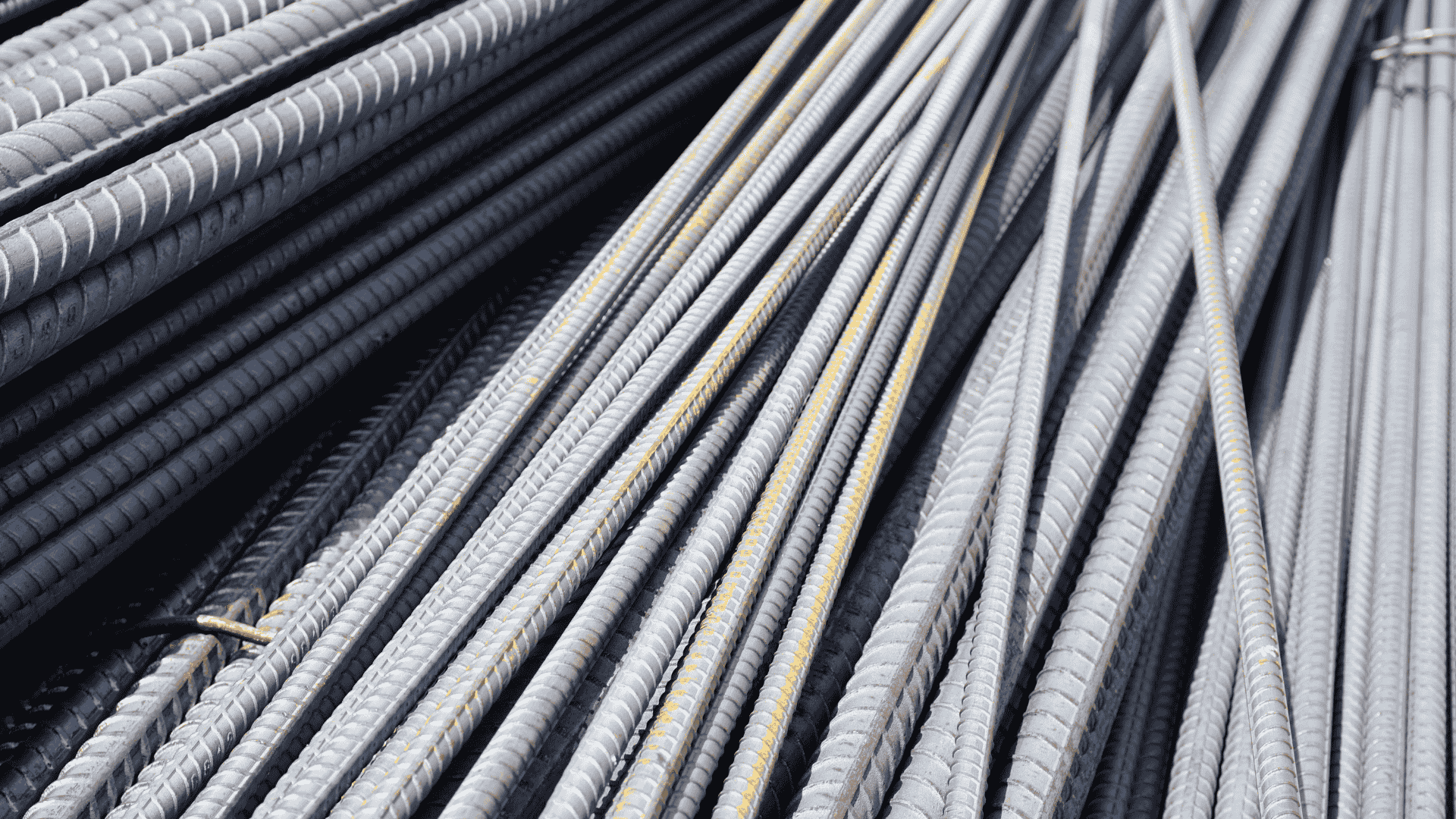
TMT bars form the tensile framework inside concrete members and directly influence structural strength, crack control, and long-term performance on site. Selection errors usually surface during concreting stages, when replacements delay pours and disrupt labour planning.
Key applications and grade-related buying considerations include:
-
Columns and beams: Grades 500D and 550D support higher ductility and better performance under cyclic loading conditions.
-
Slabs and foundations: Consistent diameters help maintain bar spacing, avoiding congestion that complicates vibration and concrete compaction.
-
Project sequencing: Continuous availability matters when concreting progresses floor by floor across multiple weeks.
Verified grades prevent disputes during testing and engineering inspections at the site.
2. Structural Beams (ISMB, UB, WPB, NPB)
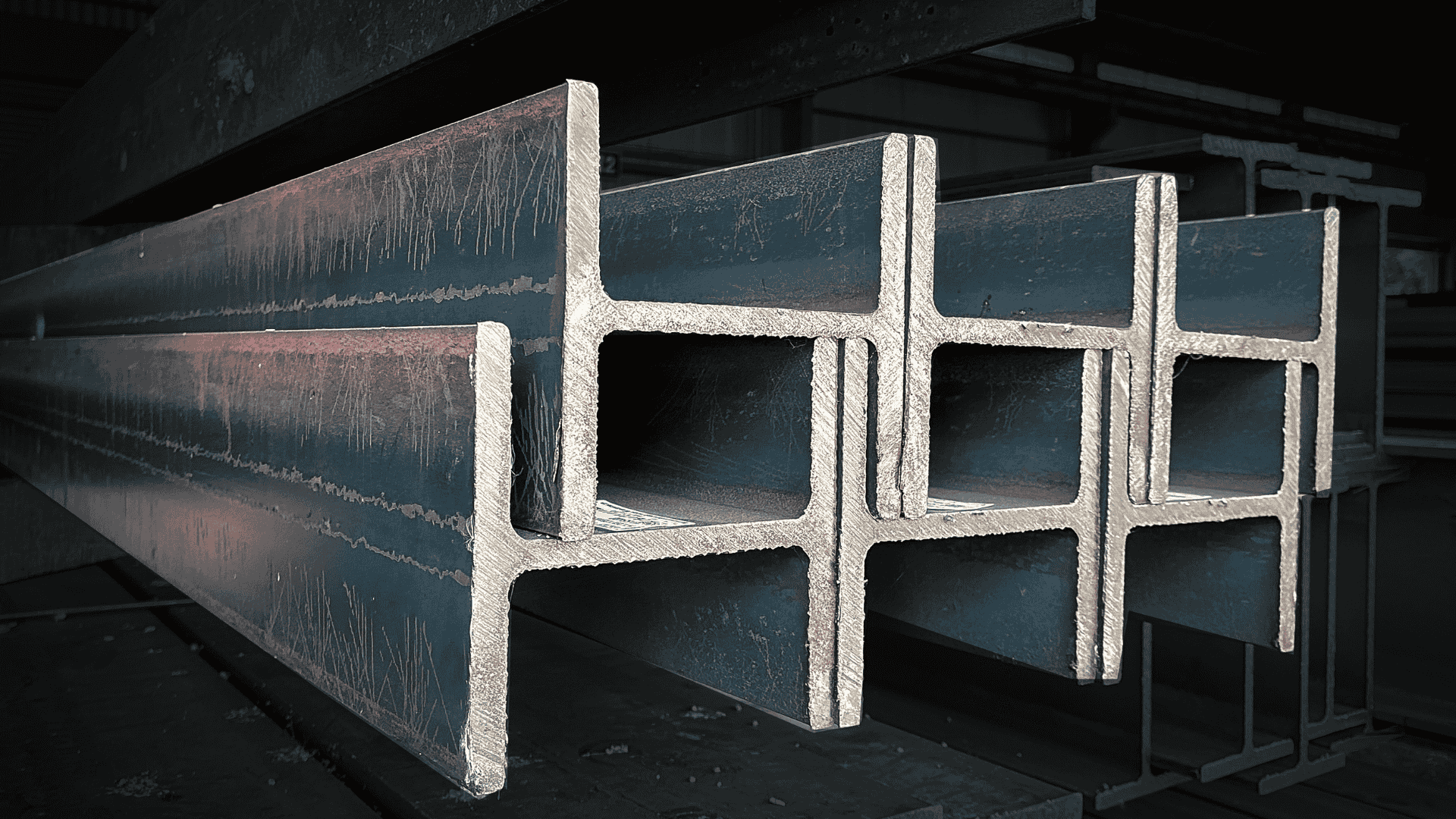
Structural beams support floors, roofs, and equipment loads while controlling deflection across spans that vary by building layout and function. Choosing the wrong beam section often leads to redesigns once headroom or vibration issues appear.
Common beam types, grades, and site relevance include:
-
ISMB (Joists): Commonly supplied in IS 2062 E250 or E350, suitable for moderate spans in industrial and commercial buildings.
-
Universal Beams: Typically specified in IS 2062 E350, supporting longer spans and higher bending demands.
-
WPB and NPB: Used in heavy framing, frequently paired with HSLA steel to handle higher loads without increasing member size.
Exact section availability avoids substitutions that trigger drawing revisions and approval delays.
3. Universal Columns (UC)
Columns act as vertical load carriers and directly affect foundation sizing, base plate design, and erection tolerances during frame assembly. Any mismatch in column sections causes cascading issues across structural and civil works.
Key grade and planning considerations include:
-
Axial load capacity: Columns are usually specified in IS 2062 E350 to manage higher compressive stresses.
-
Storey height: Taller columns demand stricter control on straightness and section uniformity.
-
Erection planning: Consistent column lengths support faster alignment during crane operations.
-
Supply certainty: Section changes often stall foundation and anchor bolt coordination.
4. MS Channels and C Channels
Channels serve as secondary members that support roofing, cladding, walkways, and equipment frames across industrial and commercial buildings. Though secondary, their repetition across bays amplifies the impact of sizing or supply errors.
Typical applications and grade-related checks include:
-
Purlins and side runners: Usually supplied in IS 2062 E250, adequate for secondary load conditions.
-
Support frames: Straightness affects load transfer and connection accuracy.
-
Fabrication work: Dimensional consistency reduces site cutting and welding corrections.
-
Bulk planning: Shortfalls delay finishing activities and commissioning schedules.
5. MS Angles for Bracing and Framing
Angles provide lateral stability and connection strength within structural frames, trusses, and support systems. Their performance depends on correct sizing and placement across the structure.
Common uses and grade considerations include:
-
Cross bracing: Angles in IS 2062 E250 or E350 resist lateral forces from wind and equipment movement.
-
Trusses: Used as main and secondary members in roof systems.
-
Connection detailing: Supports bolted and welded joints across beams and columns.
-
Quality checks: Weight per metre must match specifications to maintain load assumptions.
6. MS Plates and Flats in Structural Fabrication
Plates and flats connect primary and secondary members, transferring forces through base plates, gussets, and stiffeners across the structure. Inconsistent thickness often causes fabrication mismatches and erection delays.
Where grades matter most includes:
-
Base plates: Commonly specified in IS 2062 E250 or E350, aligned with column grades.
-
Gusset plates: Join bracing members and resist combined forces.
-
Flats: Used for stiffening, edge detailing, and connection reinforcement.
-
Procurement risk: Late plate supply halts fabrication and disrupts erection sequencing.
7. Hollow Sections (MS Square and Rectangular Pipes)
Hollow sections are widely used in trusses, sheds, and industrial frames where balanced strength and clean geometry are required. Their closed shape supports uniform load distribution when designed correctly.
Preferred applications and grade checks include:
-
Roof trusses: Grades like IS 4923 YST 210 or YST 240 support axial and bending loads.
-
Industrial sheds: Faster assembly supports tighter construction timelines.
-
Architectural frames: Cleaner appearance with fewer exposed connections.
-
Quality control: Straightness and length consistency prevent fitment issues during fabrication.
Each structural steel type addresses a specific construction need. Clear alignment between section choice, site conditions, and procurement planning reduces uncertainty, limits changes, and supports steady project progress.

How to Choose the Right Structural Steel for Your Project
Selecting the right structural steel type starts long before ordering begins. Decisions made during planning affect approvals, fabrication flow, delivery sequencing, and site productivity.
When section choices align with loads, spans, and construction conditions, teams reduce redesign risk and avoid last-minute substitutions. A structured approach helps you move from drawings to execution with fewer disruptions.
Here are the key factors that should guide structural steel selection:
-
Load requirements and structural role: Begin by identifying whether the member carries primary loads or supports secondary elements. Beams and columns demand stricter section control than purlins or bracing members. Misjudging this difference leads to oversizing or unsafe reductions.
-
Span length and deflection limits: Longer spans increase deflection sensitivity. Beams that appear adequate by strength may fail serviceability checks once floors or equipment loads are applied. Early coordination with design intent avoids changes after fabrication starts.
-
Construction method and erection sequence: The steel choice should suit how the structure will be assembled on site. Heavier sections may slow crane cycles. Smaller repeated sections often speed erection in sheds and industrial buildings.
-
Fabrication complexity: Standard rolled sections reduce shop work and inspection time. Built-up members require plates, welding, and testing, increasing dependency on fabrication schedules and plate availability.
-
Availability and lead time: Section sizes that are commonly rolled reach the site faster and reduce dependency on special orders. Limited availability often triggers section substitutions, delaying approvals and execution.
-
Consistency across the structure: Repeating section sizes across bays simplifies procurement, fabrication, and erection. Variation increases the chance of missed quantities and site-level confusion during installation.
-
Connection and detailing requirements: Plates, angles, and flats must match selected beams and columns. Mismatches create fit-up issues that slow welding and bolting work at the site.
-
Testing and inspection expectations: Structural steel often undergoes third-party testing. Clear grade and section selection reduces rejections and disputes during inspections.
Choosing structural steel is not only a design task. It is a coordination exercise between engineering intent, supply planning, and site execution. When you evaluate steel types using these checks, projects move forward with fewer mistakes and better control over time and cost.
Also Read: How To Choose The Right Structural Steel For Your Project
Common Mistakes Contractors Make When Selecting Structural Steel
Many structural steel issues do not arise from poor design but from rushed or incomplete selection decisions during procurement. These mistakes usually surface when work is already underway, making corrections costly and disruptive.
Understanding where contractors commonly go wrong helps teams avoid delays, disputes, and repeated approvals. Below are frequent mistakes seen across construction and fabrication projects:
-
Selecting sections based only on price: Choosing steel purely on quoted rates often ignores availability, rolling tolerance, and delivery reliability. Lower prices lose relevance when substitutions or delays halt site progress.
-
Ignoring load role differences: Treating primary load-bearing members and secondary supports as interchangeable leads to unsafe sizing or unnecessary overspending. This confusion often causes engineers to recheck and make drawing revisions.
-
Overlooking the availability of exact section sizes: Designs may specify uncommon sizes without checking mill availability. When sections are unavailable, last-minute alternatives trigger approval delays and rescheduling of fabrication work.
-
Underestimating delivery sequencing needs: Ordering steel without matching site erection stages causes stacking issues, double handling, or idle cranes. Poor sequencing disrupts planned workflows and increases site congestion.
-
Accepting unverified substitutions: Replacement sections suggested during shortages may differ in weight, flange width, or depth. These changes affect connections, base plates, and alignment across the structure.
-
Inconsistent section repetition: Using too many section variations complicates fabrication and increases the risk of missed quantities. Repetition supports smoother ordering, tracking, and installation across bays.
-
Late coordination between fabrication and procurement: Fabricators often require plates, angles, and beams in a fixed order. Delayed or partial supply interrupts shop schedules and pushes erection timelines.
-
Ignoring testing and inspection requirements: Steel procured without clear grade traceability faces rejection during third-party testing. Replacements at this stage disrupt both procurement and site execution.
Most of these mistakes stem from viewing steel selection as a one-time purchase decision. In practice, it is a planning exercise that connects design intent, supply certainty, and site execution.
Avoiding these mistakes becomes easier when your steel sourcing process supports clarity, consistency, and predictable delivery across project stages.
Why Source Structural Steel from SteelonCall?
When you source structural steel, you are committing project timelines, budgets, and execution certainty to that decision. Issues like unclear pricing, grade mismatches, or delayed dispatches usually surface mid-execution, when corrections become costly.
What you need is price and supply visibility before ordering, followed by reliability that continues until the material reaches your site. SteelonCalloperates as a digital steel marketplace designed to close these gaps that contractors and fabricators commonly face while buying structural steel.
Here is why many project teams choose SteelonCall:
-
Clear, GST-inclusive pricing before booking: SteelonCall is the only platform where you can view actual steel prices online with GST included, helping you plan costs accurately without post-booking additions.
-
Verified suppliers only: Material is sourced exclusively from trusted vendors, protecting you from mixed lots, incorrect grades, and unclear material history during inspection and unloading.
-
Price match support for cost stability: If you receive a verified lower quote elsewhere, the rate is matched, helping you maintain pricing consistency across repeat or phased orders.
-
Planned and faster dispatch movement: Dispatches are coordinated in advance to reduce waiting time, keeping fabrication and construction schedules steady during critical execution phases.
-
Consistent quality from known brands: Every batch is supplied from established manufacturers, giving you confidence in grades for beams, plates, and other structural sections used in load-bearing work.
-
Flexible payment options: Multiple payment choices help you manage cash flow effectively across large-volume or long-duration projects.
-
Instant customer support: Quick assistance during booking, dispatch tracking, or delivery helps you resolve issues faster and avoid unnecessary site delays.
If you want structured supply, transparent pricing, and predictable delivery while sourcing structural steel, SteelonCall gives you the clarity and control required for smoother project execution.
Conclusion
Structural steel decisions shape how smoothly a project moves from drawings to execution. When the right sections are selected early, teams avoid redesigns, reduce approval cycles, and keep site activity predictable. Clear choices around beams, columns, channels, plates, and bars remove uncertainty when schedules tighten and delivery windows narrow.
Projects that progress without disruption usually share one pattern. Steel selection considers load role, fabrication practicality, availability, and delivery sequencing together. This approach reduces substitutions, limits inspection issues, and supports steady coordination between procurement, fabrication, and site teams.
If you are planning upcoming work or reviewing current requirements, explore our product catalogueto check available structural steel sections, grades, and formats.
FAQs
1. What factors influence the cost of structural steel?
The price of structural steel can vary based on the type of steel, the size and complexity of the order, availability of specific grades, and transportation costs. Regional supply and demand, as well as fluctuations in raw material prices, can also affect the final cost.
2. How do weather conditions impact the installation of structural steel?
Extreme weather conditions, such as heavy rain, snow, or high winds, can delay the installation of structural steel. These conditions may affect the safety of workers, handling, and crane operations, as well as the storage of materials on-site.
3. What is the typical lead time for ordering structural steel?
Lead times for ordering structural steel vary depending on the supplier, steel type, and project specifics. For standard steel sections, delivery may take a few weeks, while custom or fabricated sections could require longer wait times. It's crucial to plan procurement in advance to avoid delays.
4. Are there any environmental benefits to using structural steel?
Structural steel is highly recyclable, making it a more sustainable option for construction projects. Reusing steel reduces the need for raw material extraction and minimizes waste. Additionally, steel structures are often more energy-efficient during the construction and use phases.
5. Can structural steel be used in both residential and commercial projects?
Yes, structural steel can be used in both residential and commercial buildings. In residential construction, it is often used in frames for larger buildings or those with unique design requirements. Commercial projects, like office buildings and industrial facilities, more commonly rely on structural steel for primary frameworks.
Need a price for your requirement?
Share your grade, diameter and quantity — our steel experts come back with a live quote and delivery timeline.