
SteelonCall Journal
GI Roofing Sheet Plan: Waterproof Installation Guide for Leak-Free Roofing
Create effective GI roofing sheet plans with proper waterproofing to avoid leaks. Utilize optimal slopes, overlaps, and fasteners. Click for a comprehensive guide.
Steeloncall
20 December 2025 · 11 min read
On this page
- Need to Know
- Why Waterproofing is Essential in GI Sheet Roofing Execution
- Types of GI Roofing Sheets & Their Waterproofing Performance
- Most Common Leakage Points in GI Roofing
- How to Create a Waterproof GI Roofing Plan (Step-by-Step)
- 7 Best Practices to Minimize Roof Leakage During Installation
- GI Roofing Procurement & Delivery Checklist
- Conclusion
- FAQs
Roofing is one of the most unforgiving phases in a build, because every leak becomes a long-term service issue. If the wrong GI sheets are sourced or waterproofing planning is rushed, rainwater can seep through screw holes, ridge joints, and overlaps.
The result? Complaints, damp interiors, damage claims, and emergency rework when labour and scaffold costs are at their peak. With the right GI roofing plan, execution becomes faster, leak-free, and stress-free, exactly what contractors want when handover deadlines are closing in.
This guide helps you prevent those issues early by understanding how to plan GI roofing sheets with proper slopes, side lap detailing, fastener sealing, and drainage transitions so water never finds a path inside.
Need to Know
-
GI roofing becomes leak-proof only when slope, overlaps, and joint sealing are planned before installation begins, not after.
-
Over 90% of roof leakage issues come from micro-defects at screw holes, laps, and flashing joints, not damaged sheets.
-
Sheet thickness, coating type, and profile selection must match rainfall intensity, wind exposure, and span length.
-
EPDM fasteners + butyl tape + proper flashings eliminate most leakage risks and prevent expensive rework later.
-
Pre-cut sheet lengths and verified delivery scheduling keep installation smooth and prevent handling-related defects on site.
-
Choosing certified GI roofing products with traceable mill quality protects long-term performance and warranty.
Why Waterproofing is Essential in GI Sheet Roofing Execution
Even a perfectly installed GI roof can fail if water seeps through the smallest gaps. What begins as a minor drip can quickly lead to interior dampness, rust streaks, and expensive repair work across ceilings and walls.
According to an empirical survey of residential buildings, over 90% of roof leakage issues identified during testing were caused by micro-level defects, not major cracks, showing how unforgiving roofing execution can be when waterproofing is treated casually.
Here’s how improper waterproofing directly impacts project outcomes:
-
Leak Path at Fasteners & Overlaps → Rework & Customer Complaints: Any loose screw, missing washer, or gap in side laps allows water seepage during heavy rains, leading to ceiling patchwork and interior damage.
-
Corrosion at Unsealed Edges → Reduced Roof Life: Water exposure at cut edges and ridge zones accelerates rusting, turning a durable GI roof into a replacement liability in a few years.
-
Wind-Driven Rain → Uplift & Structural Instability: Poor sealing and anchoring at boundary areas leave roofs vulnerable during storms, risking sheet displacement or blow-offs.
-
Blocked Drainage Paths → Water Backflow Under Sheets: When outlets aren’t planned, water stagnates and flows in reverse under overlaps, invisible until it becomes a soaked slab or wall.
-
Labour & Scaffold Extension Costs → Budget Drain: Fixing leaks after installation requires fresh mobilization and access setup, multiplying the cost of a small oversight.
A well-planned GI roofing waterproofing strategy eliminates these risks, giving clients what they expect and contractors what they need: zero-leak performance from day one.

Types of GI Roofing Sheets & Their Waterproofing Performance
Not all GI roofing sheets behave the same under rainfall and wind pressure. Their profile design, coating durability, and joint geometry directly affect how well they prevent seepage over long-term weather exposure.
Below are the GI roofing sheet types commonly used in waterproof construction planning, with how each performs in moisture and monsoon-heavy zones:
1. Corrugated GI Sheets
Traditional wave pattern that drains water smoothly. Naturally channels water downward, reducing stagnation. Requires proper overlap sealing to avoid capillary water rise under strong winds
Best for: Residential roofs, small sheds, low-budget projects in moderate rainfall zones
2. Trapezoidal / Industrial Profile Sheets
Wider crest heights provide stronger resistance to water splash and uplift. Tighter interlocking at laps reduces leakage risk at overlaps
Best for: Factory roofs, commercial structures, warehouses with high wind exposure
3. Standing Seam GI Roofing Sheets
Raised seam joints ensure zero screw penetration on the top surface. One of the highest-performing systems for waterproofing and durability
Best for: Premium buildings, high-rise structures, coastal & heavy-rainfall projects
4. Tile Profile GI Sheets
Stylish appearance similar to terracotta tiles. Performs well, but ridge joints require careful sealing for waterproof reliability
Best for: Villas, institutional buildings, architectural roofing upgrades
5. Powder-Coated / Pre-Painted GI Sheets
An additional paint layer maximizes corrosion protection and water resistance. Helps prevent rust stains and sheet deterioration in long-term exposure
Best for: Coastal regions, schools, public buildings with a long service life focus
The more complex the profile and sealing system, the fewer leakage points over time, but the installation skill level must match.
Suggested read: 5 Best Types Of Metal Roofing For Residential Projects
Most Common Leakage Points in GI Roofing
Even when GI sheets are installed using the right thickness and grade, improper detailing or rushed installation creates tiny leakage routes that become bigger problems once the monsoon hits. These leaks typically appear not at the sheet surface, but at the connection points where precision matters the most.
Here are the areas where waterproofing failures usually begin:
-
Side & End Overlaps: When the overlap distance is insufficient for the roof pitch or sealing tape is missing, rainwater is pulled inward through capillary action. High-wind zones worsen this, forcing water into joints even if the gap is barely visible.
-
Fastener Screws and Washer Seats: Misaligned screws, over-tightening, or cracked washers create micro-gaps around the fastener hole. Over time, these become rust pockets that expand and allow seepage directly into the purlin and ceiling area.
-
Ridge, Valley, and Hip Joint Areas: These are the highest-flow water zones. If flashing is poorly aligned or not sealed underneath, wind-driven rain enters beneath the ridge cap and travels along the sheet ribs before dripping inside.
-
Roof Penetrations (Skylights, Solar Stands, Vents, Chimneys): Any additional fixture breaks the roof continuity. Without proper metal flashing + butyl tape sealing, differential thermal movement opens up joint gaps and causes chronic leaks.
-
Eaves, Gutters & Rainwater Runoff Zones: Improper slope or gutter blockage causes overflow. Reversed water flow can creep beneath sheets and enter underlap edges, especially at corners and lower-height endings.
-
Corrosion-Damaged Sections: Scratches during handling or chemical exposure during construction cause accelerated rusting. Once coating breaks, tiny perforations form and spread, particularly in coastal and industrial zones.
How to Create a Waterproof GI Roofing Plan (Step-by-Step)
Waterproofing success in GI roofing depends more on design and preparation than on what happens once workers climb the roof. A planned installation eliminates leak paths before sheets ever touch the purlins, saving costly rework later.
Follow this step-by-step planning sequence used by reliable roofing contractors:
Step 1: Choose Correct Sheet Thickness & Grade
-
Match thickness based on building type, wind exposure, and span length.
-
Thicker sheets improve rigidity and reduce deflection → fewer open joints.
Step 2: Finalize Roof Pitch for Efficient Water Flow
-
Minimum recommended slope: 10°–14° (depending on sheet profile)
-
Lower slopes require enlarged overlaps and mandatory sealing tape.
Step 3: Plan Overlaps by Orientation & Wind Direction
-
End lap: 150–200 mm minimum
-
Side lap: 1.5 corrugation minimum
Align laps away from windward side to prevent backflow.
Step 4: Select Fasteners Designed for GI Roofing
-
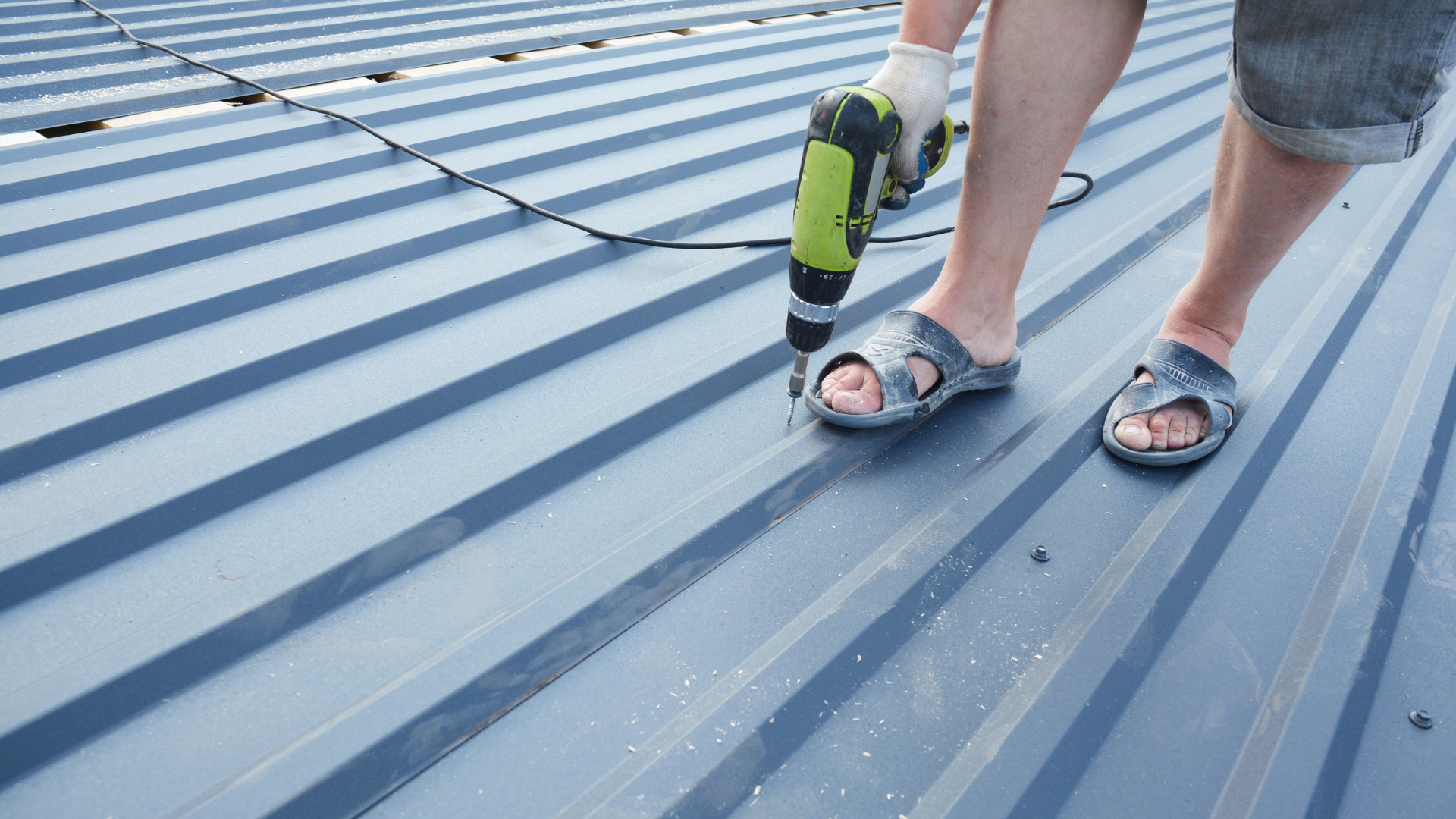
Use self-drilling screws with EPDM washers, not standard bolts.
-
Prevents micro-cracking around holes and stops long-term seepage.
Step 5: Add Flashings for All Corner & Junction Points
-
Critical locations: ridge, valley, edge, hip, and penetrations.
-
Flashing must extend beneath the top sheet and be sealed with butyl tape.
Step 6: Specify Waterproof Sealing Materials
-
Mandatory during installation:
• Butyl sealing tape under overlaps
• Silicone-based sealant for rib joints -
These block capillary movement at water flow intersections.
Step 7: Design Rainwater Path & Drainage Accessories
-
Ensure continuous downflow:
• Properly aligned gutters
• No steps/dips in alignment
• Free of construction debris during handover
Step 8: Quality Checks During Installation
-
Check each sheet as it is fixed:
• No denting or scratching of galvanized coating
• All screws perpendicular and fully seated
• Test key overlap areas with water-spray if possible
Step 9: Handover Documentation
-
Record installation parameters: slope, fastener count per sheet, and sealing zones. Helps in future maintenance or expansion works.
7 Best Practices to Minimize Roof Leakage During Installation
Even premium GI sheets can leak if the installation overlooks small sealing and alignment details. Contractors follow these disciplined practices to avoid rework and costly waterproofing disputes later.
-
Butyl Sealant Tape: Creates a tight seal between laps and closing ribs, blocking capillary water movement that causes hidden seepage during heavy rainfall.
-
EPDM-Washer Roofing Screws: Prevents water entry around drilled holes by maintaining long-term elasticity, even under sheet vibration and thermal expansion.
-
Silicone / PU Joint Sealant: Forms a flexible waterproof skin over joints and exposed sheet edges, eliminating leak risks where overlaps alone are not enough.
-
Custom Ridge / Valley / Edge Flashings: Shields transitions and sheet intersections from direct rain exposure so water is guided outward without finding entry points.
-
Anti-Capillary Groove Enabled Sheet Profiles: Breaks the reverse flow of rainwater along side-laps, protecting large roof areas from slow internal leaks during wind-driven rain.
-
Gutter System with Downpipes: Controls roof runoff and prevents backflow at wall joints by rapidly directing water away from the roof envelope.
-
Touch-Up Zinc-Rich Paint: Covers installation scratches and cut edges to stop localized corrosion, the starting point of many long-term leak failures.
Suggested read: Mild Steel Applications in Fabrication: Uses, Advantages & Processes
GI Roofing Procurement & Delivery Checklist
Before placing a GI roofing order, procurement teams verify a few critical points that directly impact waterproofing performance, installation speed, and final landed cost. A quick review upfront prevents delivery delays, misalignment issues, and rework during roofing execution.
|
What to Check |
Why It Matters |
Quick Action Before Ordering |
|
Sheet Thickness & Grade (e.g., 0.5 mm, 0.6 mm IS-certified) |
Incorrect thickness leads to denting, noise issues & poor load resistance |
Verify grade & thickness against roof design and wind zone |
|
Coating Type (GI Zinc/Alu-Zinc/AZ coating) |
Determines corrosion resistance & long-term waterproofing |
Match coating based on coastal / high-humidity exposure |
|
Profile Matching (corrugated vs. trapezoidal) |
Ensures proper overlap & leak-free joints |
Confirm panel profile with purlin spacing & existing components |
|
Sheet Length Accuracy |
Extra joints = high leakage risk |
Use pre-cut lengths based on roof slope to minimize overlaps |
|
Flashings, Ridges & End Caps Included |
Missing accessories cause sealing failures |
Finalize complete BOQ, not just sheets |
|
Delivery Timing Aligned with Installer Schedule |
Prevents sheet warping, scratches, dust settlement |
Plan dispatch to match installation start date |
|
Lift & Access Feasibility on Site |
Avoids handling damage & delays |
Scout crane access paths before delivery reaches site |
|
Packaging Protection |
Scratches cause early rust points |
Ensure sheets arrive with protective wrapping & handling supports |
|
Supplier Verification & Warranty |
Eliminates counterfeit stock risk |
Choose verified marketplace + ensure MTC provided |
Pro Tip: Confirm overlap direction and screw spacing with the installer before ordering hardware, this alone prevents most fastening and leakage complaints later.
Conclusion
GI sheet roofing only performs as expected when the waterproofing plan is precise and the material sourcing is reliable. Most leakage issues are not due to the sheet itself, but due to detailing gaps, improper overlaps, missing flashings, or delayed deliveries that force rushed installation. When sheet grade, coating, and joint sealing are aligned with the roof’s exposure conditions, the structure stays protected for years without maintenance surprises.
By procuring verified GI roofing materials on time and following a well-defined execution checklist, contractors can maintain project continuity, prevent rework, and deliver watertight roofs that meet client expectations.
SteelonCall helps construction teams access verified GI roofing sheets, waterproofing accessories, and location-based delivery support, ensuring you get the right product at the right time.Explore GI sheet options & place your requirement now.
FAQs
1. What sheet thickness is recommended for leak-free GI roofing?
For most industrial and commercial roofs, 0.50 mm to 0.60 mm thick GI sheets help control deflection, prevent denting, and maintain tight overlaps. Thinner sheets usually increase leakage risk over time.
2. Do galvanized roofing sheets need additional waterproofing treatment?
GI coating protects against corrosion but does not fully prevent water seepage at joints. Ridge caps, butyl tapes, and properly sealed fasteners are still essential for waterproof installation.
3. What roof slope helps avoid water stagnation and seepage?
GI roofs perform best with a minimum slope of 8°–12°. Low slope or flat profiles slow drainage and create hidden leak paths under overlaps.
4. How do I prevent leaks at screw points?
Use EPDM-sealed roofing fasteners and avoid over-tightening. Cracked or warped washers are the #1 cause of rainwater dripping through screw holes.
5. Does SteelonCall support bulk GI sheet orders with accessories?
Yes. SteelonCall supports verified sourcing, bulk scheduling, and delivery planning aligned with installation. Waterproofing accessories like ridge caps and sealants can also be included as part of the order.
Need a price for your requirement?
Share your grade, diameter and quantity — our steel experts come back with a live quote and delivery timeline.