Mild Steel vs Galvanized Iron: Which One To Choose For Your Next Project?
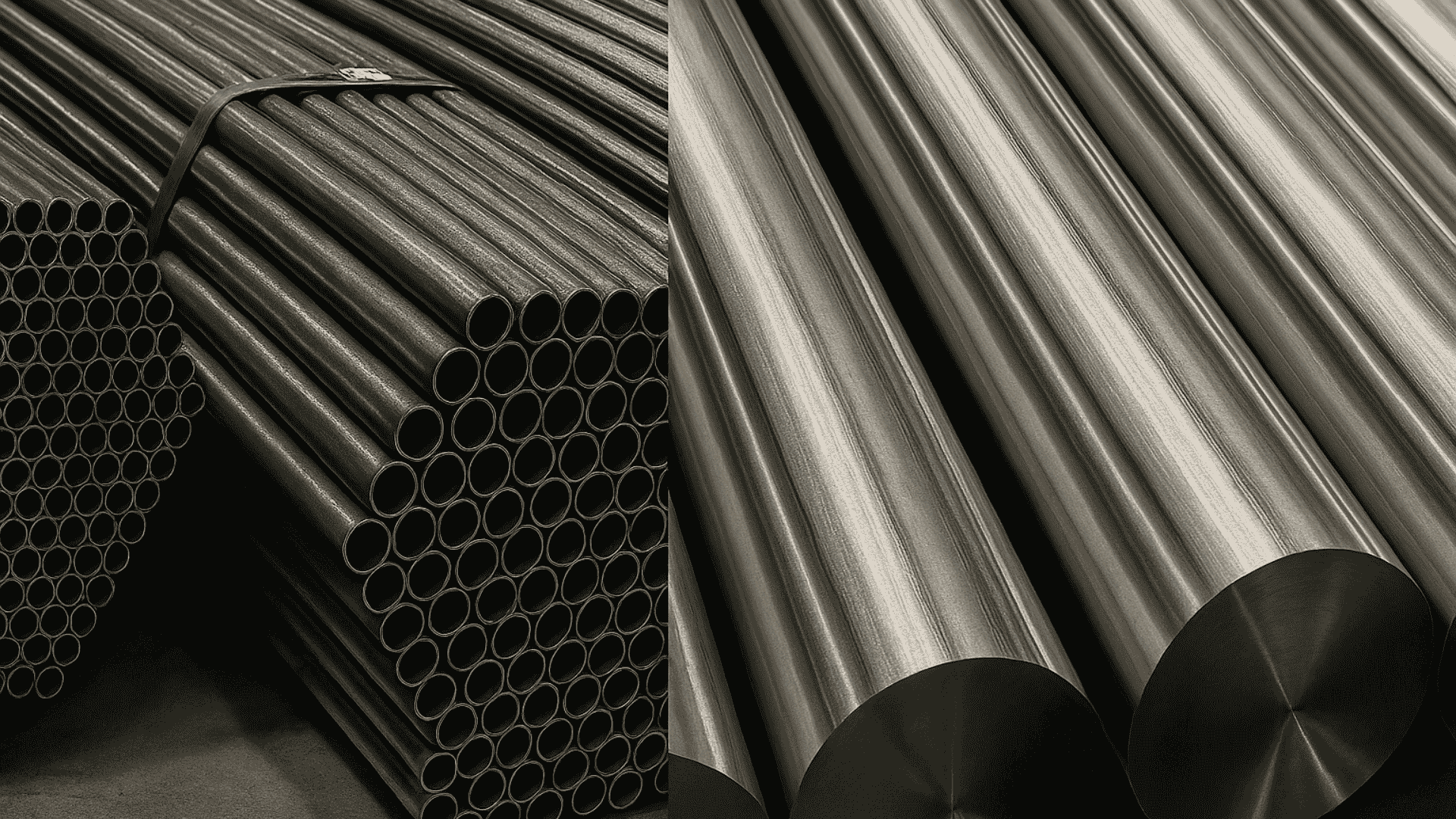
Material selection errors cause premature corrosion and structural weaknesses in building projects. Choosing between mild steel and galvanized iron without proper understanding risks costly repairs and safety issues. These mistakes impact project longevity and maintenance budgets significantly.
Understanding material properties prevents these expensive errors and ensures project durability. The correct choice between mild steel vs galvanized iron depends on your specific application and environment.
This guide compares both materials across critical performance parameters. You will learn selection criteria based on environment, durability, cost, and project requirements.
Key Takeaways
-
Use Mild Steel (MS) in dry, inland areas (C2/C3 zones) with painting. Galvanized Iron (GI) is mandatory for coastal (C4/C5 zones) or humid environments.
-
MS offers superior weld quality and ease. Welding GI releases toxic fumes and requires grinding off the zinc coating and reapplying a protective zinc-rich epoxy paint.
-
MS demands active maintenance (repainting every 5-7 years). GI provides passive protection, often lasting 20-25 years without major maintenance.
-
MS offers lower CAPEX (initial cost), while GI offers lower OPEX (long-term maintenance cost). Calculate the TCO (Total Cost of Ownership) before ordering.
-
Always confirm the zinc thickness for GI. Structural grades require 275 GSM or higher; cheap coatings might only be 120 GSM and fail prematurely.
-
Ensure MS complies with IS 2062 standards and demand mill test certificates (MTCs) for both MS and GI to verify material authenticity and quality.
Understanding Mild Steel And Galvanized Iron
Contractors often treat these materials as interchangeable, but their chemical compositions and surface treatments dictate distinct applications. You need to understand their core properties to assign them correctly within your construction plans:
Mild Steel (MS)
Mild steel is the backbone of the construction industry, defined by its low carbon content (0.05% to 0.25%). This composition makes it highly ductile, malleable, and easy to fabricate without compromising structural integrity.
Where it works best:
-
Structural Frameworks: Ideal for columns, beams (ISMB), and heavy trusses in industrial sheds.
-
Hidden Supports: Perfect for internal reinforcement where aesthetics or weather exposure are irrelevant.
-
Custom Fabrication: Best for gates, grills, and machinery parts requiring extensive welding and shaping.
Watchpoints:
-
Rapid Oxidation: It rusts quickly if exposed to moisture without a protective coat of primer or paint.
-
Maintenance: Requires regular inspection and repainting, increasing long-term labour costs.
-
Storage: Needs protection from rain during site storage to prevent surface pitting before installation.
Also read:Understanding Mild Steel Grades in Indian Standards
Galvanized Iron (GI)
Galvanized iron is essentially steel that has undergone a chemical process to apply a protective zinc coating. This barrier acts as a sacrificial anode, corroding first to protect the underlying steel from rust.
Where it works best:
-
Water Handling: Standard for pipes, water tanks, and plumbing due to rust resistance.
-
Outdoor Structures: Essential for roofing sheets (GP sheets), fencing, and agricultural framing exposed to rain.
-
Coastal Construction: Highly recommended for projects in humid regions like Visakhapatnam to combat salt air.
Watchpoints:
-
Weldability Issues: The zinc coating creates toxic fumes during welding and can weaken the weld pool.
-
Paint Adhesion: Paint often peels off the smooth zinc surface unless you use a specific etching primer.
-
Cost: The galvanization process adds to the per-ton price compared to raw mild steel.

Understanding these fundamental differences in composition and treatment is the first step; now you must align them with your actual construction environment.
Choosing By Environment And Exposure
Your project's location should be the primary driver for your material selection. The corrosivity of the local atmosphere, categorized from C1 (very low) to C5 (very high), dictates the lifespan of your steel.
1. Inland & Dry
In regions with low humidity and minimal chemical exposure, corrosion risks are significantly lower.
-
Recommendation: Mild Steel is the most cost-effective choice. The low humidity levels mean a standard coat of red oxide primer and enamel paint provides sufficient protection for 10-15 years.
-
Why: The rate of oxidation is slow. Investing in expensive GI for internal dry partitions here is often unnecessary over-specification.
2. Coastal & Industrial
High salinity and industrial pollutants aggressively accelerate the oxidation process in untreated steel.
-
Recommendation: Galvanized Iron is non-negotiable. The salt-laden air attacks the iron in Mild Steel, causing it to flake and lose structural mass within 2-3 years if painted poorly.
-
Why: Zinc corrodes 10-100 times slower than steel in these environments. The "cathodic protection" of zinc means that even if the coating is scratched, the surrounding zinc will corrode to protect the exposed steel, preventing the rust from spreading underneath.
Environmental factors establish the need for corrosion resistance, but your choice must also account for the material's inherent lifespan and failure predictability.
Also read: How to Prevent Corrosion in Steel
Choosing By Durability And Longevity
Durability is defined not just by the material's initial lifespan but by its failure mode and the maintenance regime required to keep it standing.
Understanding how each material reacts to aging helps you forecast long-term operational costs and select the right option for your client's facility management capabilities.
1. Mild Steel (The Maintenance Heavyweight)
Mild steel relies entirely on external barrier coatings to prevent structural degradation.
-
Lifespan: 50+ years only if maintained.
-
Failure Mode: Rusts from the outside in. If the paint layer cracks (which happens with thermal expansion), moisture seeps in and rust travels effectively under the paint, often unnoticed until it flakes off.
-
Action: Requires sandblasting and repainting every 5-7 years to maintain structural integrity.
2. Galvanized Iron (The "Fit and Forget" Option)
The sacrificial zinc coating provides autonomous protection without the need for constant surface maintenance.
-
Lifespan: 20-25 years in moderate environments without any maintenance.
-
Failure Mode: The zinc layer slowly sacrifices itself. Once the zinc is depleted, the steel rusts.
-
Action: Requires "Cold Galvanizing" spray touch-ups only on cut ends or welds. It significantly reduces the facility management budget for your client.
Beyond the projected years of service, the ultimate choice between MS and GI also depends heavily on how the material behaves during critical on-site fabrication.
Choosing By Strength, Flexibility, And Weldability
While both materials start as steel, their fabrication behaviours differ significantly, affecting your onsite labour and structural design limits.
You must weigh the superior ductility and ease of welding found in mild steel against the rigidity and specialized fabrication requirements of galvanized sections.
1. Structural Integrity (Yield Strength)
The core mechanical properties of the material determine its ability to withstand static and dynamic loads.
-
Mild Steel: Superior. It retains its ductility, allowing it to bend under stress without cracking. This is vital for load-bearing beams that need to absorb vibrations or seismic shifts.
-
GI: The heat from the galvanizing process can sometimes induce slight brittleness in the outer layers. It is generally rigid and less suited for members that need to be bent significantly after coating.
2. The Welding Challenge
Joining these materials requires vastly different site protocols to ensure worker safety and joint strength.
-
Mild Steel: Welds cleanly. The carbon steel base fuses perfectly, creating a joint as strong as the parent metal.
-
GI: Difficult and dangerous. Welding burns the zinc coating, releasing toxic zinc oxide fumes (causing "metal fume fever" in welders). Furthermore, zinc inclusions in the weld pool can cause porosity, making the joint weak.
-
Fabricator Tip: If you must weld GI, you must grind off the zinc coating at the weld site first and reapply a zinc-rich epoxy paint post-welding.
Need complex fabrications with extensive welding? Source certified mild steel sections with guaranteed weldability. Check our live prices now.
Mechanical performance and fabrication ease are key, but the long-term viability of your project is also tied to sustainability and the structure's final aesthetic.
Also read: Different Types of Roofing Sheets Explained
Choosing By Environmental Impact And Appearance
Project aesthetics often demand specific finishes that interact differently with raw steel versus zinc-coated surfaces.
Beyond looks, you must consider the sustainability profile, balancing the recyclability of zinc against the long-term environmental cost of solvent-based paints used on mild steel.
1. Aesthetics & Paintability
Achieving the desired architectural finish depends heavily on the material's surface adhesion properties.
-
Mild Steel: Offers a rough surface that holds paint extremely well. It allows for glossy, custom-coloured finishes required for architectural branding.
-
GI: Has a spangled, oily surface. Standard paints peel off it like a sticker. To paint GI, you must use a "T-Wash" (mordant solution) or a specific etch primer to chemically bite into the surface before painting.
2. Sustainability
Modern construction demands a clear understanding of the material's lifecycle carbon footprint and recyclability.
-
GI: Zinc is 100% recyclable, and the long lifespan means less material replacement. However, the initial energy cost of the hot-dip process is higher.
-
MS: Lower initial carbon footprint, but the repeated use of solvent-based paints over its lifecycle releases Volatile Organic Compounds (VOCs) into the atmosphere.
Once aesthetic and environmental factors are considered, the final decision pivots entirely to procurement, where cost and accurate specification become paramount.
Cost, Specification, And Supply Awareness For Contractors
Effective budgeting requires analyzing the Total Cost of Ownership (TCO) rather than just the per-ton purchase price.
You need to account for the hidden costs of surface preparation and coating thickness specifications to ensure your procurement actually delivers value over the project's lifecycle.
Don't just look at the per-ton price; look at the Total Cost of Ownership (TCO).
1. Budgeting
Financial planning must distinguish between the immediate procurement cost and the long-term maintenance expense.
-
Mild Steel: Low Material Cost + High Labour Cost (Sandblasting, Priming, Painting, Repainting).
-
Galvanized Iron: High Material Cost + Low Labour Cost (Installation only).
-
Verdict: For short-term projects or tight CAPEX (Capital Expenditure) budgets, MS wins. For long-term projects where OPEX (Operational Expenditure) matters, GI is cheaper.
2. Specifying Correctly
When ordering GI, always specify the GSM (Grams per Square Meter) of zinc. A standard commercial coating might be 120 GSM (lasts ~5-8 years), whereas a structural grade requires 275 GSM or higher (lasts 20+ years). Buying "cheap GI" often means buying a thin coating that fails quickly.
Cost and specification set the parameters for the purchase, but you must also plan for the post-installation commitment: the required maintenance to sustain performance.
Maintenance Requirements: Sustaining Performance and Longevity
Maintenance commitments differ significantly between mild steel and galvanized iron, impacting your project's long-term operational costs. Understanding these requirements helps you plan resources and budget effectively throughout the structure's lifecycle.
Proper maintenance planning prevents unexpected expenses and ensures structural integrity over time. Here are the key maintenance aspects for each material:
1. Maintenance Frequency and Scheduling
Mild steel requires regular inspection and maintenance cycles to prevent corrosion. Galvanized iron needs less frequent checks focused on coating integrity.
Plan quarterly inspections for mild steel and annual checks for galvanized iron in standard environments.
2. Maintenance Procedures and Techniques
Mild steel maintenance involves surface preparation and protective coating application. Galvanized iron requires simple cleaning and spot repair of damaged coating areas.
Factor in surface preparation time and material costs for mild steel maintenance.
3. Long-Term Maintenance Costs
Mild steel accumulates significant maintenance expenses over its service life. Galvanized iron's maintenance costs remain minimal beyond initial investment.
Calculate total lifecycle costs, including all maintenance activities before material selection.
4. Skill Requirements for Maintenance
Mild steel maintenance demands skilled painters and surface preparation experts. Galvanized iron repairs can be handled by general maintenance staff with basic training.
Consider your available maintenance capabilities when choosing between materials.
With all performance criteria analysed, you are ready to implement a rigorous sourcing strategy, beginning with a strict checklist before releasing the final order.
Procurement Checklist Before You Release The Order
A material comparison is only valuable if it translates into a verified order that protects your site from non-compliant delivery. The fragmented nature of the steel supply chain means the onus is on the buyer to set strict standards before confirmation.
You must ensure the steel you source reflects the exact specifications and quality required by your engineering design, protecting your margins from inferior substitutes.
Contractors must implement these critical checks before finalizing any bulk steel purchase order:
1. Grade and Specification Compliance for MS/TMT
You must insist on mill test certificates (MTCs) to verify the physical and chemical properties of the material. For mild steel, confirm compliance with IS 2062 standards, and for TMT bars, ensure the specific grade, like Fe 500D or Fe 550D, is certified.
This ensures the steel meets the minimum yield strength and elongation limits required for structural safety and regional building codes.
2. Galvanized Coating Thickness (GSM) Audit
When ordering GI products like sheets or pipes, you must specify and confirm the Grams per Square Meter (GSM) of the zinc coating. A low GSM indicates a cheap, thin coating that will fail prematurely in high-corrosion zones.
Verify the supplier guarantees a structural-grade coating, typically 275 GSM or higher, to secure the promised longevity of the galvanized product.
3. Physical Condition and Dimensional Integrity
Conduct an inspection on a small sample of the material for surface defects before accepting the full bulk order. For Mild Steel, confirm the absence of deep rust pitting or heavy mill scale.
For all sections, verify that the length, diameter, and wall thickness (as applicable) adhere strictly to the allowable tolerances for efficient fabrication and fitment on site.
4. Pricing Transparency and Documentation
Always confirm that the final, competitive bulk pricing received from the verified manufacturer is clearly documented, detailing any taxes. Ensure the quotation explicitly states whether the price is GST inclusive or exclusive, preventing unexpected cost increases at the time of delivery.
Even the most thorough checklist is useless without a reliable supply chain. This is where a verified marketplace simplifies the procurement of both MS and GI.
Also read: 1 Ton Steel Price Today in India: Updated Rates and Buyer Guide
A complete invoice with grade certification acts as your critical defence against supply disputes.
Sourcing Quality And Certainty With SteelOnCall
Sourcing both mild steel sections and galvanized sheets often forces you to deal with multiple fragmented vendors. You frequently encounter issues where local dealers mix grades or supply GI sheets with insufficient zinc coating to improve their margins.
This lack of transparency forces you to conduct rigorous onsite testing and delays your fabrication timelines. SteelOnCall resolves these procurement conflicts by providing a unified digital marketplace for all your steel requirements.
We connect you directly with verified manufacturers, ensuring that the MS beams or GI pipes you order meet strict quality standards. Our features include:
-
Verified Inventory: Access genuine TMT, MS sections, and GP sheets from trusted brands like Vizag Steel.
-
Transparent Pricing: Get real-time, competitive bulk rates without hidden dealer markups.
-
Flexible Logistics: We manage delivery to your site, whether in the city centre or a remote location.
-
Quality Certification: All materials come with mill test certificates to validate grade and coating specifications.
You get the right material for the specific application, delivered on time to keep your project moving.
Also read: Tata Steel vs JSW Steel: A Comparative Analysis
Conclusion
Choosing between mild steel and galvanized iron requires balancing structural loads against environmental aggression. Use Mild Steel for your primary frameworks where strength and welding are paramount. Switch to Galvanized Iron for secondary elements, roofing, and piping where moisture resistance is the priority.
SteelOnCall simplifies this sourcing process by aggregating high-quality inventory for both categories on one platform. We assure verified manufacturers and efficient logistics, helping you execute projects with confidence.
Check our live prices today to secure the best rates for your MS and GI requirements.
FAQs
Q. Can I paint directly over Galvanized Iron?
No, standard oil-based paints do not adhere well to the zinc surface and will peel quickly. You must use a specialized wash primer or an etch primer designed for galvanized surfaces before applying the topcoat.
Q. Is Mild Steel stronger than Galvanized Iron?
Yes, generally Mild Steel retains better ductility and tensile strength compared to GI. The galvanization process does not increase strength; it only adds protection. Structural applications almost always favour Mild Steel.
Q. How do I protect welded joints on Galvanized Iron?
Welding burns off the zinc coating at the joint, leaving it exposed to rapid rusting. You must clean the weld area immediately and apply a "cold galvanizing" zinc-rich spray or paint to restore protection.
Q. Which is more expensive, MS or GI?
Galvanized Iron is typically more expensive per unit of weight than Mild Steel. The price difference covers the cost of the zinc material and the galvanization processing required during manufacturing.
Q. Can I use Mild Steel for plumbing pipes?
It is not recommended. Mild Steel pipes will corrode internally due to constant water contact, leading to leaks and contamination. Galvanized Iron (GI) pipes are the industry standard for water lines.
Steel on call
20 Dec, 2025